
WhatsApp

close
Choose Your Site
Global
Social Media
Author: Site Editor Publish Time: 2026-03-02 Origin: Site


Artificial grass can look great or fail fast. The difference often starts with the tools contractors use. In this article, you will learn which tools matter most at each stage of installation and how they help create cleaner, stronger, and more consistent results.
A well-installed artificial grass surface always starts below what you see. Contractors often find that most long-term issues—like uneven patches or drainage problems—trace back to poor base preparation. Using the right tools at this stage is less about convenience and more about ensuring structural integrity from the ground up.
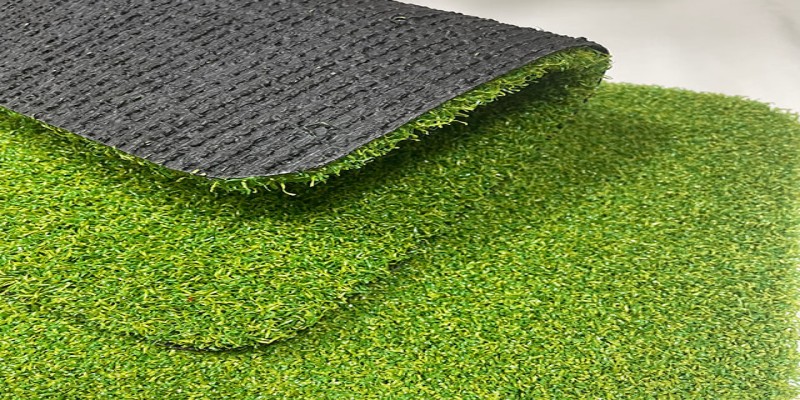
Clearing the site properly is the first step toward a stable installation. On larger projects, gas-powered turf cutters allow contractors to remove existing grass quickly and consistently, reducing labor time. For smaller or irregular areas, hand tools such as shovels and rakes still play an important role in reaching tight edges or around obstacles.
Beyond speed, the goal is thoroughness. Any leftover roots, organic debris, or soft soil layers can break down over time, leading to uneven settling beneath the artificial grass. Contractors often combine mechanical removal with manual inspection to ensure a clean, compactable surface before moving forward.
Once the area is cleared, compaction becomes the defining step in base preparation. A plate compactor is widely considered essential in synthetic turf installation because it compresses the base material into a firm, uniform layer. Without this, even well-leveled surfaces can shift after installation.
Poor compaction is one of the most common causes of long-term issues. Surfaces may begin to sink unevenly, develop subtle dips, or allow water to collect in low spots. These problems often appear weeks or months after installation, making them costly to fix. Proper compaction, performed in multiple passes, helps prevent these failures by stabilizing the entire base structure.
Compaction Quality | Common Outcome | Long-Term Impact |
Well-compacted base | Even surface | Stable, long-lasting turf |
Under-compacted base | Soft or shifting areas | Wrinkles, sinking, uneven wear |
Inconsistent compaction | Localized dips | Water pooling, drainage issues |
Accurate measurement ensures that the prepared base performs as intended. Simple tools such as measuring tapes, string lines, and spirit levels are often sufficient to define layout and maintain consistent grading. For larger or more complex projects, contractors may use laser levels to improve precision across wide areas.
Slope is particularly important for drainage. Even though most artificial grass systems include perforated backing, water still needs a direction to flow. A slight, controlled gradient—typically around 1–2%—helps prevent standing water and protects the base from erosion.
This becomes even more relevant when working with drainage-focused products like Qingdao XiHY artificial grass, where the backing is designed to channel water efficiently. Without a properly graded and compacted base, even advanced drainage features cannot perform effectively, making early-stage measurement and leveling critical to the overall installation.
Once the base is prepared, the focus shifts to the most visible part of the project. Cutting, joining, and positioning artificial grass directly affect how natural and seamless the final surface appears. Even high-quality materials can look unprofessional if these steps are handled poorly, which is why contractors rely on precise tools and consistent techniques.
Accurate cutting is essential for achieving clean edges and tight fits, especially around borders, curves, and obstacles. A sharp utility knife is the most commonly used tool, but its effectiveness depends heavily on blade condition. Synthetic turf backing—often reinforced for durability—can dull blades quickly, so frequent replacement is necessary to maintain precision.
Clean cuts are not just about appearance; they also influence how well sections align during seaming. Uneven or jagged edges can create gaps or overlaps, making seams more visible. For more controlled cuts, especially along straight lines or detailed areas, contractors may use specialized cutters or heavy-duty shears to maintain consistency across large sections.
Seaming is where craftsmanship becomes most apparent. Joining two sections of artificial grass requires careful alignment, consistent spacing, and proper bonding. The standard method involves placing seam tape beneath the edges and applying adhesive evenly before pressing the turf into position.
The challenge lies in achieving a seam that blends visually with the surrounding turf. Misalignment, excess adhesive, or trapped fibers can all make seams stand out. Even small inconsistencies in spacing can disrupt the overall look, especially in open areas where the surface is fully visible.
Seaming Factor | Correct Approach | Visible Issue if Done Poorly |
Edge alignment | Edges meet closely without overlap | Gaps or uneven lines |
Adhesive application | Even, consistent spread | Weak bonding or adhesive bleed |
Fiber direction | Fibers aligned in same direction | Color mismatch or shading contrast |
Pressure applied | Firm, even pressure with seam roller | Raised or loose seams |
After cutting and seaming, proper stretching ensures the surface remains flat and secure over time. Tools like carpet kickers are commonly used to apply controlled tension across the turf, helping eliminate wrinkles and air pockets. This step is especially important when working with large rolls that may have been compressed during storage or transport.
Without adequate stretching, the turf may shift slightly after installation, particularly in high-traffic areas. This can lead to visible ripples or loose sections that compromise both appearance and durability. By gradually tensioning the turf and securing it in place, contractors create a more stable surface that maintains its form under regular use.
The final stage of an artificial grass installation often determines whether the surface looks merely completed or genuinely professional. After the turf has been laid and secured, the focus shifts to infill placement and fiber grooming. These tasks may seem secondary compared with excavation or seaming, but they directly affect how the surface performs under foot traffic and weather exposure.
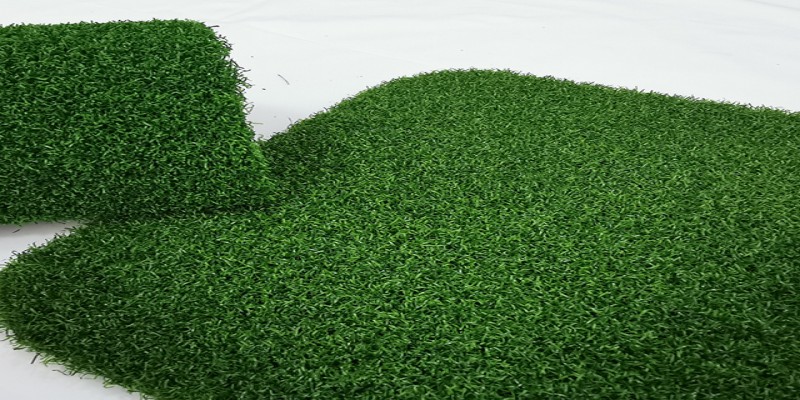
Infill does more than add weight to the turf. It helps support the blades, protects the backing from premature wear, and contributes to stable footing across the surface. For that reason, distribution has to be controlled rather than approximate. A drop spreader is widely used because it releases material at a steady rate, allowing contractors to apply infill in manageable passes instead of dumping too much in one area at once.
When infill is uneven, the problems show up quickly. Areas with too little material may feel soft, flatten faster, and expose more of the backing. Areas with too much can look heavy, brush poorly, and interfere with drainage. Contractors usually work in light layers, checking coverage visually as they move across the surface, rather than trying to reach the final depth in a single pass.
Infill Condition | What It Looks Like on Site | Likely Result |
Too little infill | Fibers lean over easily and backing sits closer to the surface | Faster wear and less stability |
Too much infill | Surface feels overly dense and fibers appear buried | Reduced visual realism and harder grooming |
Evenly distributed infill | Fibers remain supported with a balanced surface feel | Better drainage, durability, and appearance |
A consistent application also matters for drainage. Artificial grass systems are designed to move water through the backing, but infill that is patchy or compacted unevenly can interfere with how water travels across and through the surface. That makes proper spreading an installation issue, not just a finishing detail.
Once infill has been applied, the turf needs to be brushed so the material settles properly and the fibers stand upright. Power brooms are commonly used for this step because they can lift flattened blades and work infill deeper into the pile with much more consistency than hand tools. On larger installations, this improves both speed and uniformity.
Brushing also changes how the turf looks from normal viewing distance. A surface that has been filled but not groomed often appears flat and artificial, even if the material itself is high quality. After brushing, the fibers open up, the infill sits lower in the structure, and the lawn takes on a more natural texture. This process also helps preserve resilience by reducing matting in areas expected to see repeated use, which is one reason it remains a standard part of professional installation practice.
Contractors do not need the largest possible tool kit to install artificial grass well. What matters more is matching equipment to the job at hand. A compact backyard project, for example, usually does not require the same setup as a schoolyard, pet facility, or commercial landscape. When tool choices reflect project size and site conditions, the installation process becomes more efficient and easier to manage.
Smaller residential installations often rely on a leaner setup. Basic cutting tools, a measuring kit, a broom, and a compactor may be enough to complete the work to a high standard. On larger jobs, however, specialized equipment becomes more practical. Turf pullers, power brooms, and heavy-duty transport tools can reduce physical strain and help crews maintain accuracy across wider areas.
Selecting tools based on scale also prevents unnecessary complexity. Bringing oversized or rarely needed equipment onto a simple site can slow movement, add setup time, and increase costs without improving the finish. In practice, experienced contractors build around essential tools first, then add project-specific equipment only when it clearly solves a problem.
One of the most practical decisions contractors make is whether a tool should be owned or rented. Items used on nearly every job—such as utility knives, spreaders, and compactors—usually justify ownership because they affect daily workflow and are repeatedly needed. By contrast, larger machines used only occasionally are often more economical to rent.
Tool Type | Better to Own When... | Better to Rent When... |
Utility knives and hand tools | Used on nearly every installation | Rarely, since cost is low |
Plate compactors | Frequent base prep is part of regular work | Jobs are occasional or seasonal |
Turf transport equipment | Large-roll handling is common | Large projects are infrequent |
Specialized power equipment | Crews use it often enough to justify upkeep | Storage, maintenance, or transport is a burden |
Renting also offers flexibility. It allows smaller contractors to take on larger installations without committing capital to equipment that may sit unused for months. That approach helps control overhead while still giving access to the right tools when project demands increase.
Good tools improve speed, but their bigger value is consistency. A sharp cutter produces cleaner seams, a reliable compactor creates a more stable base, and a power broom helps finish the surface evenly. These details matter more when working with durable, weather-resistant artificial grass systems intended to perform for years. Proper tooling supports correct installation methods, which in turn helps the finished surface hold its shape, appearance, and drainage performance over time.
Successful artificial grass installation depends on using the right tools at every stage, from base work to finishing. Focusing on a few essential tools helps contractors work more efficiently and achieve more reliable results. Qingdao XiHY Artificial grass company adds value with durable, drainage-friendly turf that supports long-term performance across different project types.
A: For artificial grass, contractors usually need a turf cutter, plate compactor, rake, and level to create a stable, drain-ready base.
A: A sharp utility knife is standard for artificial grass because it delivers cleaner edges and more accurate seam alignment.
A: Not always. Smaller artificial grass projects can use basic hand tools, while larger sites benefit from compactors, power brooms, and transport equipment.


