
WhatsApp

close
Choose Your Site
Global
Social Media
Author: Site Editor Publish Time: 2026-01-15 Origin: Site


You will see a few main types of dry ski slope material. These include Dendix, Snowflex, Neveplast, M-Snow, artificial ski grass, and other engineering plastics. Each material has its own good points. Dendix has a hexagonal bristle design. But some people say it is not always safe. Newer materials like Neveplast and Skitraxx give better grip and safety. You can ski on them without using extra lubricants. These materials let you ski all year. They feel like real snow and are strong and safe.
Dendix is gentle for beginners but hurts if you fall. Newer materials can be safer for you.
Snowflex is soft and does not need much effort. It works well for everyone.
Neveplast is strong and simple to set up. It can last 15 years with little care.
M-Snow is good for the environment and gives strong grip. But it can hurt if you fall on it.
Pick the best material for your skill and what you want. This helps you have the best time.

Dendix is a common dry ski slope material. It has plastic bristles in a hexagon shape. Each hexagon has a hole in the middle. This helps you slide more easily. The bristles are short and stand straight up. They are made from nylon fibers. You can see the main features in the table below:
Characteristic | Description |
|---|---|
Structure | Plastic bristles arranged in a hexagonal shape |
Friction Reduction | Each hexagon has a hole in its center to reduce friction |
Material Composition | Made from nylon fibers that are perpendicular and short |
User Experience | Provides a forgiving surface for beginners and controlled slides for advanced users |
Maintenance | The slope is kept wet with a sprinkler system to maintain smooth skiing experience |
Dendix was first used in the 1970s. It uses nylon or polypropylene bristles to feel like snow. You can turn and control your skis well on it. But Dendix can hurt if you fall. Newer materials like Proslope are softer and safer.
Snowflex is a newer dry ski slope material. It looks like a white carpet. Snowflex has layers of foam and water-holding material. This makes the base soft and steady. The table below shows its main features:
Feature | Description |
|---|---|
Shock Pad | 2” (50mm) shock pad allows for skis and snowboards to deflect the surface, providing superior grip and control. |
Stability | Unique fixing system provides stability and permanence while maintaining performance and safety. |
Water Lubrication | Consistent water lubrication across gradients enhances user experience and prolongs equipment life. |
Snowflex gives you a softer landing if you fall. It uses less energy than cold slopes. You can build Snowflex on land that is not good for other things. Water keeps the surface smooth and safe.
Neveplast is another dry ski slope material. It is made from HDPE and LDPE. The surface has small bumps. These bumps help with grip and let water drain. Neveplast is easy to move and install. Here is a summary:
Material Type | Composition | Characteristics |
|---|---|---|
Neveplast | High-density polyethylene (HDPE) and low-density polyethylene (LDPE) | Surface has small bumps for friction, allows drainage, easy to transport and install |
Neveplast lasts a long time. It can work well for 12 to 15 years. You only need to brush and check it often. This makes it a good choice for many ski places.
M-Snow is made from recycled materials. It is stretchy and does not wear out fast. You can ski on it all year. M-Snow feels like real snow, but it is harder. The table below lists its main good and bad points:
Advantages | Disadvantages |
|---|---|
Good lubrication | Can be painful when falling |
High elasticity and wear resistance | Harder surface compared to snow |
Environmentally friendly and safe for health | Potential for injury due to harder surfaces |
Experience close to real snow | Discomfort when falling on harder surfaces |
M-Snow is cheap and lasts a long time. You get good grip and speed. But it can hurt more if you fall.
Artificial ski grass is another dry ski slope material. It comes as slip matting, brushed matting, and liquid coatings. Each type slides differently and lasts a different time. The table below compares them:
Type | Glide Quality | Durability | Maintenance | Best Application |
|---|---|---|---|---|
Slip Matting | Excellent | Very Good | Low-Moderate | Permanent ski slopes, commercial facilities |
Brushed Matting | Excellent | Excellent | Moderate-High | Training centers, ski schools, varied terrain |
Liquid Coatings | Good | Fair | High | Temporary events, urban installations, trails |
You can use artificial ski grass for both long-term and short-term slopes. It works well for practice and events.
Some dry ski slopes use special plastics. These include polypropylene, HDPE, and other strong plastics. The table below shows their main features:
Type of Plastic | Key Properties |
|---|---|
Polypropylene (PP) | Hard features, good wear resistance |
High-Density Polyethylene (HDPE) | Good flexibility, excellent weather resistance |
Special Engineering Plastics | Good wear resistance, good weather resistance, flexible, but more expensive |
You will find these plastics in fancy or custom slopes. They last a long time and handle weather well. Some types cost more but stay strong longer.
Tip: When you pick a dry ski slope material, think about how it feels, how long it lasts, and how safe it is for you.
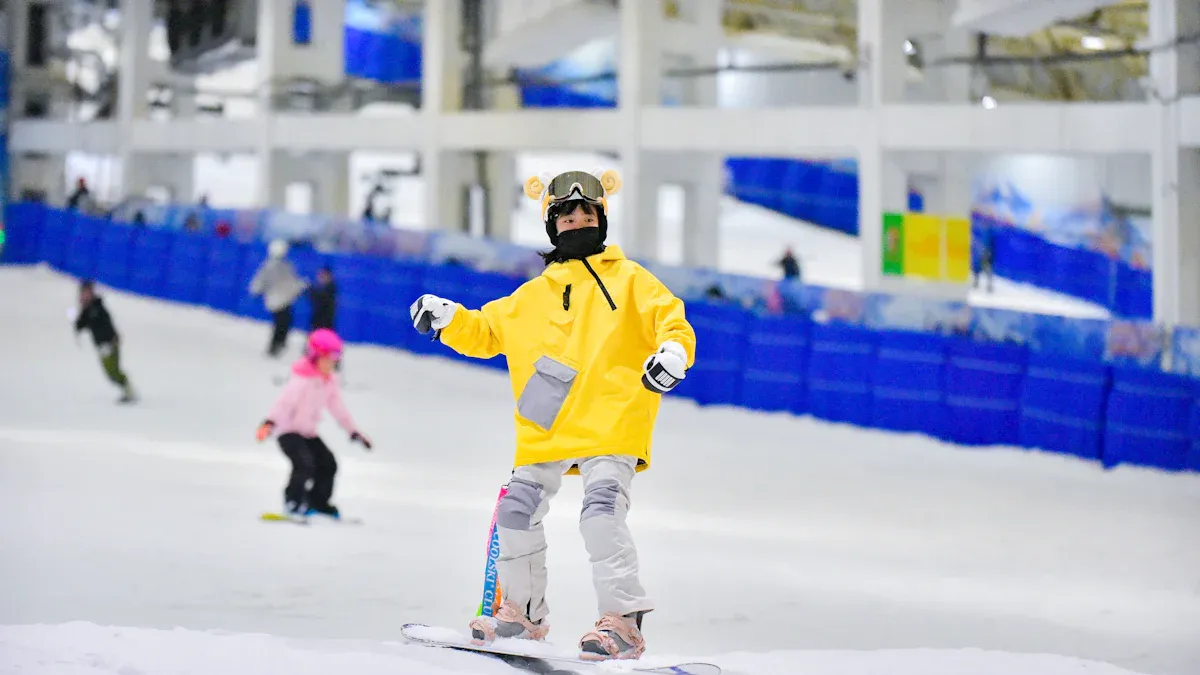
You can find dry ski slopes in many places where natural snow does not fall. These slopes help you learn skiing and snowboarding without waiting for winter. Many people use them because they are easy to access and cost less than traveling to a mountain resort. You can practice your skills in a quieter setting, away from busy ski centers. Some dry ski slopes are open-air and built with small plastic bristles. You will notice that these slopes are easy to move and replace, which makes them convenient for different locations.
Dry ski slopes give you a way to train all year.
You can use them for skiing, snowboarding, cross-country skiing, and tubing.
These slopes are popular in the UK and Ireland, where snow is rare.
You can enjoy winter sports every day, no matter the weather.
Tip: If you want to try skiing for the first time, dry ski slopes offer a safe and affordable place to start.
You might wonder how dry ski slopes feel like real snow. The answer comes from science and smart design. The materials use plastic bristles or synthetic surfaces that are kept wet. This reduces friction and helps you slide smoothly, just like on snow. Some surfaces, like Snowflex, use layers of foam and water-holding pads to create a soft base. These features let you ski and snowboard with good grip and control.
Principle Used | How It Works on Dry Ski Slopes |
|---|---|
Surface Metrology | Shapes and textures mimic snow topography |
Friction Studies | Wet surfaces lower friction for smooth gliding |
Melt Water Lubrication | Water helps skis move like on real snow |
Different materials copy the feel of snow in their own way. You will notice that skiing on plastic feels different, but the skills you learn transfer to real snow. Some materials, like Mr. Snow, give you better grip and speed. No dry ski slope can match the soft, fresh snow exactly, but you can still enjoy a fun and safe experience.
Every dry ski slope material has its own special design. Here are some main things to know:
Neveplast has a pattern with cone-shaped stems in circles. This shape helps you grip the surface, almost like real snow. The panels can bend and fit many places, even city parks.
Dendix is made from leftover brush parts. The bristles are set in a hexagon pattern. This surface does not protect you much if you fall. Water is often sprayed on top to help you slide.
Snowflex is made in West Yorkshire. It comes in white or dark green. The color is picked to match rules for different places.
Most dry ski slopes use plastics like polypropylene and polyethylene. Polypropylene makes the surface strong and bendy. Polyethylene, especially high-density polyethylene, helps the slope last longer and stand up to weather. These plastics help the slope keep its shape for a long time.
How well a dry ski slope works depends on what it is made of. Surfaces with fibers feel more like real snow. Plastic surfaces, like polypropylene or high-density polyethylene, last longer and cost less to take care of. Newer materials help you glide and grip better. This means you can ski safely and have a smooth ride.
Some surfaces, like Dendix, feel hard if you fall. Others, like Snowflex, have a softer base to protect you. Neveplast gives you good grip on the sides, so you can control your skis or snowboard. Always look at the safety features before you pick a slope.
Note: Water on the surface can make it less slippery and safer for you.
Each material needs different care. Polypropylene and polyethylene need brushing and checking often. High-density polyethylene does well in bad weather and with lots of use. Neveplast can last up to 15 years if you take care of it. Dendix and Snowflex also last a long time if you keep them clean and wet.
Here is a quick chart:
Material | Durability | Maintenance Needs |
|---|---|---|
Dendix | High | Needs water, brushing |
Snowflex | High | Needs water, cleaning |
Neveplast | Very High | Occasional brushing |
Polypropylene | High | Regular checks |
Polyethylene | Very High | Minimal upkeep |
You can make your dry ski slope last longer by following the care tips for each material.
The material under your skis changes how you ski. Some surfaces help you grip better. Others let you go faster. High-density polyethylene helps you slide smoothly. It also keeps things quiet. You get a grip that feels like real snow. This grip helps you stay steady and not fall. The table below shows how features change your skiing:
Feature | Description |
|---|---|
Material | High-density polyethylene, designed to reduce friction and noise. |
Grip | Excellent grip that prevents falls, similar to real snow. |
Speed | Allows for greater speed due to reduced point of contact. |
Weather Conditions | Consistent slope conditions that do not require grooming, beneficial in various weather. |
Muscle Memory Development | Rebounds against pressure, helping skiers develop muscle memory for snow slopes. |
Some dry ski slope materials keep the surface the same in any weather. This means you can practice turns and stops all year. You build muscle memory that helps you on real snow.
Safety is important every time you use a dry ski slope. The material you pick can help keep you safe. Softer surfaces, like Snowflex, make falling less painful. Harder materials, like Dendix, can cause more scrapes if you fall. Water systems keep the slope slick and smooth. This lowers the chance of sudden stops or falls. You should always wear gloves and long sleeves to protect your skin. Good grip helps you control your speed and direction. This makes skiing safer for everyone.
Tip: Always check if the slope is wet and wear the right gear before you ski.
You want your dry ski slope to last and stay safe. Regular care keeps the surface smooth and saves money on repairs. Here are some key points:
Good maintenance stops expensive repairs.
Proper care keeps everyone safe and helps things run well.
Dry ski slopes work all year, no matter the weather, so there is less downtime.
They are easy to take care of, so costs stay low.
You can use them any time, which helps make more money.
When you take care of your dry ski slope, everyone can ski or snowboard any time. Artificial slopes need less work than real snow. This means you have more time for fun and less time fixing problems.
You have many options for dry ski slope materials, such as Dendix, Snowflex, Neveplast, M-Snow, and artificial ski grass. Each one offers different grip, speed, and safety. Your choice changes how you ski and how much care the slope needs. Some materials, like JW440 tiles, give you a smooth ride, last longer, and cost less to maintain. These features make you want to visit again. Think about your skill level and what you want from your experience before you choose a slope.
You will find Snowflex offers the safest experience. Its soft, padded layers help cushion falls. You get better grip and less risk of scrapes compared to harder materials like Dendix.
You can use your regular skis or snowboards. Many people add harder, older equipment to avoid damage. You should check with the slope for any special rules.
Most dry ski slopes use water spray systems. These keep the surface wet and smooth. You will slide more easily and protect your equipment from wear.
You can snowboard on most dry ski slope materials. Surfaces like Neveplast, Snowflex, and artificial ski grass work well for both skiing and snowboarding.


