


WhatsApp

close
Choose Your Site
Global
Social Media


| Quantity: | |
|---|---|


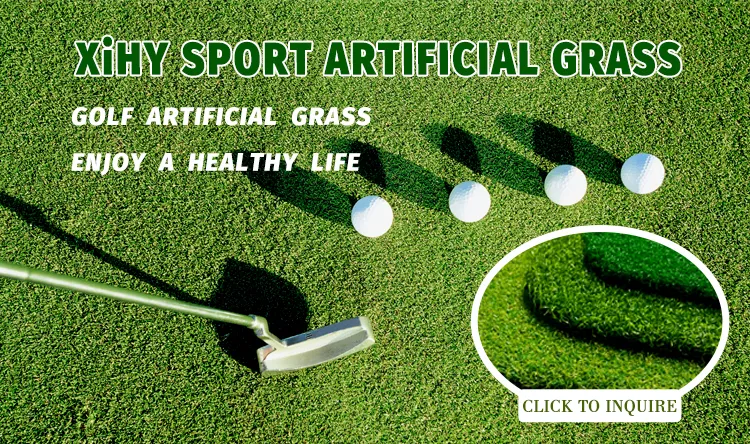
The artificial golf putting turf features a multi-color fiber blend design, creating a more natural layered appearance on the putting green. It simulates the color variation and texture of real golf turf, elevating the practice area to a more professional and premium standard.
The artificial golf putting green utilizes high-density short grass fibers that resist flattening, enabling precise control of ball roll speed (Stimp value). Ideal for professional training, commercial venues, and high-end residential putting green installations.
Rainbow artificial golf putting turf utilizes PE/PP blended fibers that resist wear and heavy foot traffic, making it ideal for high-frequency use scenarios such as commercial golf training centers, outdoor putting courses, and school practice areas.
Features an SBR or PU backing with uniform drainage holes for rapid water runoff during rain, preventing puddling and slippery conditions to ensure year-round usability.
Roll width, grass height, density, color, and elastic cushion layer structure can be tailored to project requirements, making it highly suitable for wholesale projects and large-scale commercial developments.

| Parameter Category | Detailed Specifications | Performance Advantages |
|---|---|---|
| Pile Height | 8mm, 10mm, 12mm, 15mm | Precise ball speed & roll distance control for putting practice/tournament requirements |
| Fiber Material | Dual-tone PE/PET blended fibers (UV-resistant treatment) | Natural grass visual realism >10-year fade resistance Temperature range: -40℃~80℃ |
| Pile Density | 16,800~21,600 stitches/sqm | High density prevents matting Ensures consistent ball roll |
| Backing System | Dual-layer composite: - Perforated drainage layer (hole spacing 10cm×15cm) - Reinforced PP mesh base | Rapid drainage (5-min post-storm) Tear strength ≥35MPa |
| Infill Requirement | No-infill design (Optional 0.3mm silica sand for enhanced friction) | Zero maintenance cost Eliminates bacterial growth in infill |
| Color Options | Dual-tone blends: - Emerald Green + Olive Green - Forest Green + Lime Green | Simulates natural green color variations Enhances 3D visual effect |
| Total Thickness | 25~35mm (Including shock pad) | Complies with EN 14808 safety standards Reduces joint impact injuries |
| Eco-Certifications | - 95% recycled PET materials - LEED Water Efficiency Certification - SGS Non-toxic Certification (lead/cadmium free) | Saves 55,000+ gallons water/year 100% recyclable |
| Climate Resilience | UV resistance ≥94% Drainage rate 1,200L/sqm/hour | All-weather performance: -40℃ freeze resistance 50℃ heat expansion resistance |
| Warranty Coverage | Residential: 8 years Commercial: 5 years (high-frequency use) | Covers fiber fading, delamination, drainage failure |
1.Site Preparation for Artificial Golf Putting Turf
Proper groundwork is essential before installing artificial golf putting turf.
Remove all vegetation, stones, and debris
Level the soil surface to eliminate uneven areas
Compact the sub-base to ensure structural stability
Ensure slope design for proper drainage (recommended 1–2%)
A stable foundation directly affects the performance of artificial golf putting turf, especially ball roll consistency and surface smoothness.
2. Base Construction Layer
For commercial installations of artificial golf putting turf, a high-quality base is required:
Install crushed stone or decomposed granite (8–12 cm recommended)
Compact in layers to achieve high density
Apply fine leveling sand layer for precision grading
This base system ensures that artificial golf putting turf maintains a smooth and professional putting surface under long-term use.
3. Installing Weed Barrier Membrane
A geotextile fabric is installed before laying artificial golf putting turf:
Prevents weed growth
Improves drainage efficiency
Increases system lifespan
For some large-scale projects, this step reduces long-term maintenance costs of artificial golf putting turf installations.
4. Laying Artificial Golf Putting Turf
This is the most critical stage of artificial golf putting turf installation:
Roll out artificial golf putting turf carefully on prepared base
Ensure fibers face the same direction for uniform visual appearance
Allow turf to acclimate for 12–24 hours before fixing
Trim edges according to design layout
Consistency in alignment ensures professional-level performance of artificial golf putting turf.
5. Seaming & Joining Process
For large putting greens, multiple rolls of artificial golf putting turf are joined:
Use high-strength seam tape
Apply professional-grade adhesive evenly
Press and align seams carefully to avoid visible joints
Ensure smooth transitions across sections
Proper seaming is essential for maintaining ball roll consistency on artificial golf putting turf.
6. Infill Application (Performance Adjustment Layer)
Infill determines the playing speed of artificial golf putting turf:
Apply fine silica sand evenly across the surface
Brush infill into fibers using mechanical or manual brushing
Adjust infill levels to control ball speed (Stimp rating)
Repeat brushing until surface is uniform
For buyers, this step allows customization of artificial golf putting turf performance based on project requirements.
7. Surface Finishing & Rolling
Final stage of artificial golf putting turf installation:
Use power brush to lift fibers
Roll surface to ensure flatness and smoothness
Check ball roll consistency across multiple directions
Inspect seams and edges for finishing quality
At this stage, artificial golf putting turf should achieve a professional putting green appearance.
8. Drainage & Final Inspection
A properly installed artificial golf putting turf system must include:
Water drainage testing after installation
Surface leveling inspection
Ball roll consistency check
Edge fixing reinforcement if required
This ensures artificial golf putting turf performs reliably in all weather conditions.
Key Installation Considerations
For contractors and project developers, artificial golf putting turf installation success depends on:
Base engineering accuracy
Infill calibration for putting speed
Skilled seam joining process
Drainage system design
Material quality consistency
Choosing high-quality artificial golf putting turf ensures easier installation and better long-term performance.
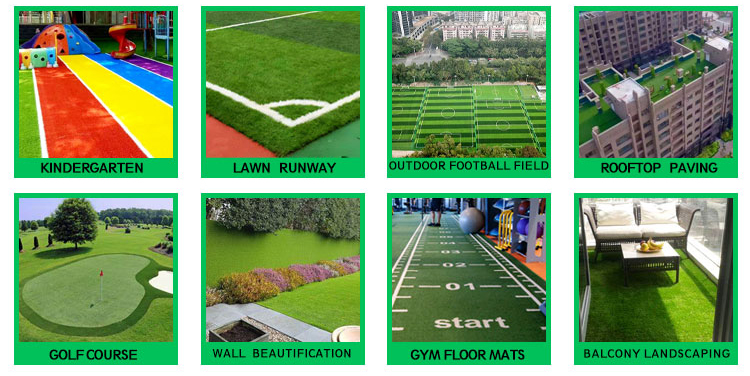
Commercial and Professional Venues
Golf Driving Ranges
Commercial Indoor Practice Greens
Golf Clubhouse Recreation Areas
Club Short Game Training Zones
Home & Leisure Sports
Private backyard greens
Roof & balcony mini greens
Indoor office recreation areas
Basement private greens
Translated with DeepL.com (free version)
1. Can the ball roll speed of artificial putting turf be adjusted?
Yes.
By modifying parameters such as grass height, grass density, and infill sand volume (optional), different roll speeds can be achieved to suit various training needs.
2. What is the lifespan of an artificial golf putting green?
Outdoor installations typically last 6–10+ years, depending on usage frequency and environmental conditions. Commercial venues may experience slightly shorter lifespans, though the turf remains highly durable.
3. Does artificial putting turf require infill?
Optional based on project requirements:
- No-infill greens: Suitable for indoor or light training
- Micro-infill greens: Enhances roll consistency and stability, ideal for professional training facilities
4. What backing types are available? Which is best for golf greens?
Backing options:
SBR backing (cost-effective, suitable for outdoor use)
PU backing (superior temperature and moisture resistance, recommended for premium projects)
PU backing is typically preferred for high-end commercial projects.
5. Do you offer wholesale and OEM services?
Yes. We provide:
Bulk project supply
Custom width, grass height, density, and color
OEM labeling and packaging
Ideal for building material wholesalers, engineering firms, and branded clients.


