WhatsApp

close
Choose Your Site
Global
Social Media
Author: Site Editor Publish Time: 2025-12-01 Origin: Site


Green Synthetic Grass: The Versatile, Low-Maintenance Solution for Modern Residential, Commercial, and Public Spaces
As urban living expands and green areas shrink, maintaining natural lawns has become increasingly difficult for both homeowners and businesses. Tasks like mowing, watering, fertilizing, and pest control require time, cost, and consistent labor. In this context, green synthetic grass has emerged as a high-performance, low-maintenance landscaping solution. Originally developed for sports stadiums due to its superior durability, it is now widely used across residential areas, commercial facilities, and public infrastructures. Its year-round vibrant appearance, weather resistance, and suitability for both indoor and outdoor environments make green synthetic grass a reliable choice for modern landscape design.
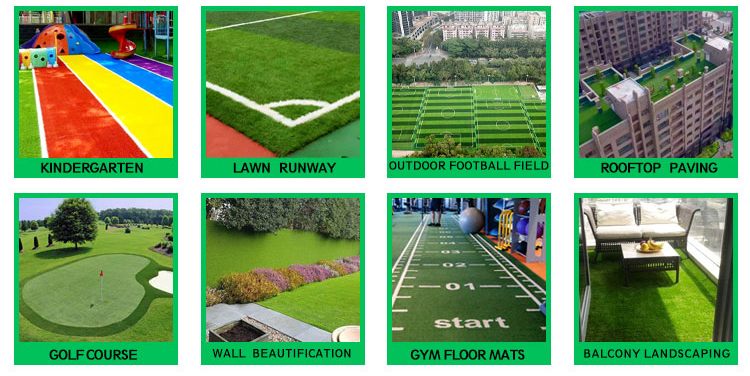
In dense cities where balconies, terraces, and rooftops offer limited space, green synthetic grass helps create warm, welcoming outdoor areas. It provides a soft, natural-looking surface that does not fade or develop bare patches even in low-light environments where natural turf struggles.
Homeowners benefit from:
Minimal maintenance—only occasional sweeping or rinsing
Pet-friendly performance—easy cleaning and resistant to digging or heavy play
Child-safe surfaces—no pesticides or fertilizers required
Year-round greenery—consistent color and texture in any climate
Many suburban homeowners also use green synthetic grass around pools, pathways, and garden borders to reduce upkeep while keeping the landscape visually cohesive.
Commercial spaces increasingly rely on green synthetic grass to create attractive, nature-inspired environments. Retail plazas, restaurant patios, and café terraces use it to invite customers with a clean and relaxing aesthetic. Corporate offices integrate synthetic turf into rooftop lounges and indoor breakout areas to enhance employee wellness.
Hotels and resorts particularly value synthetic grass around pools, cabanas, and outdoor event spaces because it withstands heavy foot traffic without becoming muddy or patchy. Temporary event planners also appreciate that it can be rolled out and removed quickly, making it ideal for exhibitions, weddings, markets, and outdoor festivals.
Municipalities and urban planners use green synthetic grass to upgrade parks, playgrounds, and school sports fields. When combined with shock-absorbing underlayment, it offers a safer, more resilient play surface for children.
Key public-space advantages include:
High durability for continuous use
Weather resistance—no mud after rain, no drying or cracking in heat
Lower maintenance costs for cities and schools
Improved community spaces through pocket parks and urban renewal projects
Furthermore, synthetic grass supports sustainability goals. It eliminates irrigation needs, reduces chemical pollution, and many modern models use recycled materials to minimize environmental impact.