


WhatsApp

close
Choose Your Site
Global
Social Media


| Quantity: | |
|---|---|


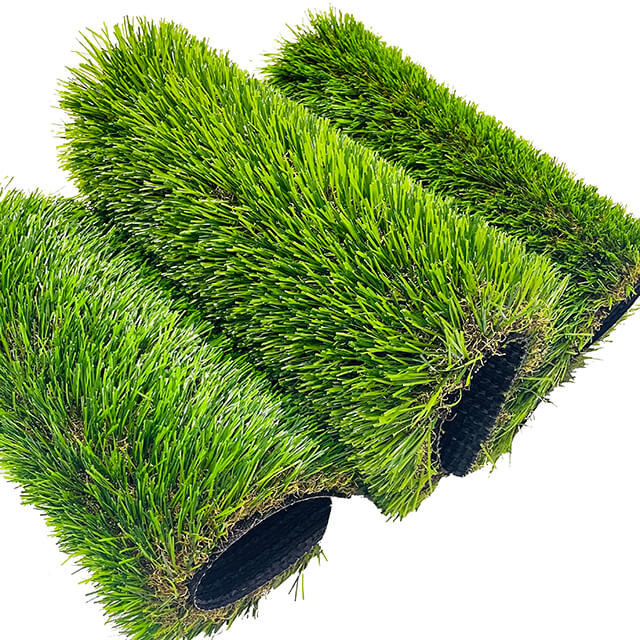
Natural-Looking Multi-Tone Appearance
Different shades of green and optional thatch fibers can create a layered appearance that looks closer to natural lawn grass. Fiber shape and density can also be adjusted to achieve different visual effects and levels of softness.
UV-Resistant Outdoor Performance
Outdoor turf is continuously exposed to sunlight, temperature changes, and weather. UV-stabilized fibers help maintain color and fiber performance during long-term outdoor use. UV resistance should be evaluated through the product's actual test data and specification rather than by appearance alone.
Durable and Resilient Fibers
PE landscape fibers provide a practical balance of softness, appearance, resilience, and durability for many outdoor lawn applications. Higher-density constructions can provide improved resistance to flattening in areas with regular foot traffic.
Efficient Water Drainage
A properly designed turf system allows rainwater and cleaning water to pass through the turf and into the prepared drainage base. Drainage performance depends not only on the turf backing but also on the aggregate base, slope, and overall installation structure.
Flexible Customization
Different landscape projects require different specifications. As artificial turf suppliers, we can provide customized options for pile height, density, yarn shape, color, backing, drainage, and roll dimensions to match the requirements of different markets and installation conditions.
 |  |

Artificial turf lawn is carefully engineered with multiple layers to ensure durability, comfort, and a natural look. Its typical composition includes:
Synthetic Fibers: The surface layer is made of polyethylene or polypropylene yarns. These fibers replicate the soft texture and natural color of landscaping artificial turf lawn , giving it a realistic lawn-like appearance.
Primary Backing: A strong woven backing holds the fibers in place, ensuring stability and resistance to wear.
Secondary Backing: Often coated with latex or polyurethane, this layer enhances the strength and durability of outdoor synthetic grass, making it suitable for long-term outdoor use.
Infill System: Sand, rubber granules, or a combination of both are applied between the fibers. This helps the blades stay upright, improves resilience, and provides a cushioned surface.
Drainage Base: The bottom layer is designed with perforations or a drainage system to allow water to pass through easily, ensuring the surface remains dry and safe even after heavy rain.

1. Prepare the Ground
Remove existing vegetation, roots, debris, and unsuitable soil. The installation area should be excavated and prepared to provide a stable foundation.
2. Build a Stable Drainage Base
Install and compact an appropriate aggregate base according to local ground conditions and expected water flow. The base should provide structural stability while allowing water to move away from the turf system.
3. Check the Slope and Drainage
Before laying the turf, confirm that the prepared surface has an appropriate fall and that drainage routes are unobstructed. Poor sub-base drainage can cause standing water even when the turf itself has permeable backing.
4. Lay and Position the Turf
Roll out the artificial grass and allow it to settle. Position adjacent rolls in the same fiber direction and carefully align the seams to create a consistent visual appearance.
5. Trim and Join the Edges
Cut the turf around walls, paving, landscaping features, posts, and other fixed structures. Where multiple pieces are required, use suitable joining tape and adhesive to create stable seams.
6. Secure the Perimeter
Fix the turf around the perimeter using appropriate landscape staples, fixing pins, edging systems, or other methods suitable for the installation surface.
7. Add Infill When Required
Some landscape turf systems use silica sand or other suitable infill to provide additional ballast, support, and fiber recovery. The required amount depends on the turf construction and project application.
8. Brush and Finish
Brush the fibers against their natural direction to help the blades stand upright. Remove loose debris and inspect seams, edges, drainage points, and transitions before completing the installation.

Use an artificial turf lawn for residential landscaping in backyards, front yards, courtyards, garden paths, and outdoor entertaining areas. It provides a consistently green surface without the routine mowing and irrigation associated with natural lawns.
For villa gardens, private courtyards, model homes, and landscaped residential developments, synthetic turf can create a clean green area that integrates easily with paving, stone, decking, flower beds, and other landscape elements.
Lightweight landscape turf is suitable for balconies, rooftop gardens, terraces, and outdoor leisure spaces where natural grass is difficult to maintain. The installation should include an appropriate drainage layer and a surface designed to handle water flow.
Hotels, restaurants, office buildings, resorts, shopping areas, and commercial properties can use artificial grass turf lawn to maintain a consistent landscape appearance in high-visibility areas.
Artificial turf can be used around children's recreational areas, kindergartens, community spaces, and family gardens. The appropriate product should be selected according to the required impact protection, drainage, traffic level, and applicable safety standards.
For pet areas and dog-friendly landscaping, drainage capacity becomes particularly important. High-drainage turf systems are available for applications where frequent cleaning and rapid water removal are required. Product construction should be matched to the intended pet use rather than relying on appearance alone.


