
WhatsApp

close
Choose Your Site
Global
Social Media
Author: Site Editor Publish Time: 2026-06-30 Origin: Site


Many homeowners fear the dreaded "miniature golf course" effect. You might worry your massive outdoor investment will yield a glossy, flat, and painfully fake yard. This common buyer's dilemma often delays renovation projects indefinitely. After all, nobody wants a lawn screaming plastic from a mile away. Fortunately, modern manufacturing shifts have completely transformed this industry. We no longer rely on monotone carpets for our residential outdoor spaces. Today, highly engineered, multi-tonal systems dominate the market. These remarkable innovations bring incredible visual depth to modern yards.
This article provides a concrete, technical evaluation framework for your next landscape project. We will help you assess vendor claims confidently. You will learn how to physically test product samples right at home. We also cover exactly how to ensure a flawless, professional installation. Armed with these insights, you can confidently upgrade your property. You will achieve the perfect balance of durability and pristine natural beauty.
True realism relies on a multi-tonal color palette and a textured "thatch" layer to mimic natural growth imperfections.
Blade shape and low-gloss finishes are critical; flat, shiny fibers instantly signal a fake lawn.
High-quality artificial grass production dictates durability and UV resistance, preventing unnatural fading over time.
Even premium realistic synthetic grass will look artificial if base preparation, seaming, and infill application are handled poorly during installation.
To identify premium realistic synthetic grass, you must examine its core components. Manufacturers engineer specific layers to replicate organic growth patterns.
Real grass follows a continuous life cycle. Blades grow, die, and shed near the soil line. Artificial turf mimics this organic cycle using a dedicated thatch layer. You will find curly, brown, or tan fibers woven tightly at the base. This inclusion stands as the primary differentiator between budget carpets and premium solutions. Thatch adds profound visual depth. It completely hides the synthetic backing material. Furthermore, it provides vital structural support. The curly base keeps the taller green blades standing upright under heavy foot traffic.
Look closely at any healthy biological lawn. It never features one single shade of green. You will spot olive tones, vibrant emeralds, and faded yellow-greens all interacting together. Perfectly uniform color creates a disturbing "uncanny valley" effect. The human eye easily detects this artificial perfection. Premium manufacturers blend three to four unique yarn colors per square inch. This multi-tonal yarn approach breaks up visual monotony. It delivers a nuanced, highly dimensional appearance replicating real turf variations.
Blade geometry dictates how light interacts with your lawn. Flat fibers act like tiny mirrors. They reflect sunlight directly back at the viewer. This creates a highly artificial sheen. Modern engineers solve this by extruding complex blade profiles. They force heated polymers through specialized molds to create C-shapes, W-shapes, and U-shapes. These curves scatter sunlight efficiently. They drastically diffuse harsh reflections. Additionally, structured blades boast superior rebound resilience. They spring back up instantly after you walk on them.
Blade Profile Shape | Light Diffusion Quality | Rebound Resilience | Ideal Landscape Application |
|---|---|---|---|
Flat / Oval | Poor (High Glare) | Low (Crushes Easily) | Indoor decor, temporary displays |
C-Shape | Excellent (Soft Glow) | Moderate | Standard residential front yards |
U-Shape / V-Shape | Very Good | High | Backyards, moderate traffic zones |
W-Shape | Superior (Multi-angle scatter) | Maximum | Playgrounds, high-traffic commercial spaces |
Shiny fibers instantly ruin the organic illusion. Raw plastics naturally carry a high surface gloss. Top-tier manufacturers employ specialized gloss-reduction techniques. They microscopically texturize the individual blade surfaces. This micro-texture scatters light rays unevenly. The result is a soft, matte appearance under direct midday sun. When evaluating samples, always prioritize matte finishes to avoid the dreaded plastic look.
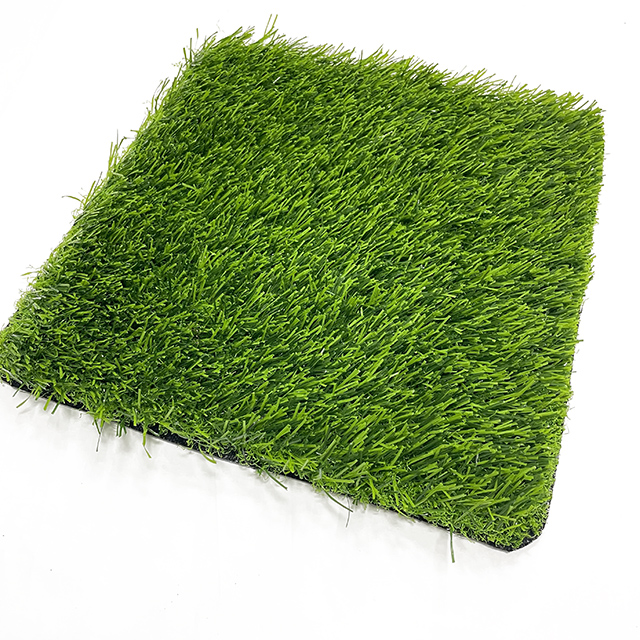
A beautiful sample matters very little if it degrades after one harsh summer. Advanced artificial grass production relies on top-tier materials to guarantee long-term visual fidelity.
Extrusion processes dictate the foundational material quality. Budget options use cheap polypropylene for the main green blades. Polypropylene feels coarse to the touch. It degrades much faster under intense environmental stress. Premium fibers utilize high-grade polyethylene instead. Polyethylene feels significantly softer. It accurately mimics the gentle, organic drape of real grass blades. Polypropylene is entirely acceptable for the underlying thatch layer, but your primary facing blades demand top-tier polyethylene for genuine realism.
Sunlight aggressively attacks and destroys unprotected plastics. Fading ruins the visual appeal of any landscape. Cheap turf often turns an unnatural bluish-green or pale yellow after a few sunny seasons. Quality UV inhibitors prevent this aesthetic disaster. Premium manufacturers mix advanced UV inhibitors directly into the liquid resin before extrusion. They do not merely spray a temporary surface coating afterward. This deep integration locks the color permanently in place. Your lawn maintains its vibrant, natural hues for a decade or more.
Visual longevity depends heavily on the unseen backing system. Polyurethane backings grip the individual fibers tightly. Industry experts call this metric "tuft bind." Weak tuft bind leads to catastrophic shedding. Daily foot traffic pulls the fibers right out of the base. Your beautiful lawn quickly develops unnatural, patchy bald spots. High tuft bind ensures the grass density remains perfectly consistent year after year.
Even the highest quality turf fails the eye test during poor installation. Securing an expert installation team ensures your investment retains its realistic aesthetic.
Installers must prepare the ground meticulously. They remove topsoil and lay down layers of crushed stone. They must compact this sub-base perfectly. Improper compaction leads to devastating visual failures. The ground sinks unevenly over time. Visible divots appear across the lawn. Water pools in unnatural, geometrical ways after heavy rain. Real grass handles soil micro-variations beautifully. However, artificial turf settling over bumpy, poorly graded gravel looks distinctly and undeniably fake.
Installers lay synthetic turf in large, heavy rolls. Every roll features a specific pile direction. The blades naturally lean slightly one way during the manufacturing process. Laying rolls in opposing directions creates a terrible, checkerboard effect. Seams present another massive risk. Poorly taped or glued seams create highly visible lines across your yard. These distinct grid lines instantly shatter the natural illusion.
Failing to compact the edges of the sub-base, leading to perimeter sinking.
Trapping grass fibers inside the seam glue tape.
Ignoring the natural viewing angle when deciding pile direction.
Many eager buyers overlook the infill process. Skipping this step remains a fatal flaw. Installers brush silica sand or specialized granules deep into the turf matrix. This infill settles heavily at the base. It weighs the entire yard system down seamlessly. Most importantly, it supports the blades from the bottom up. Without proper infill volume, fibers mat down completely. Flat, crushed fibers instantly reveal the synthetic nature of the installation.
When planning your artificial lawn landscaping, you must integrate the turf harmoniously with its surroundings. Context matters immensely.
Edge-to-edge perfection looks highly suspicious. Real yards feature varied elements and organic boundaries. Do not blanket your entire property in unbroken green. You should integrate the synthetic lawn with live hardscaping elements. Add varied planter beds filled with native shrubs. Use organic, curving border shapes rather than rigid, straight lines. Breaking up the visual field tricks the eye. It grounds the synthetic product in natural reality.
Synthetic materials absorb and retain solar heat. They simply get hotter than natural grass. You must acknowledge this thermal reality during the planning phase. Unbearably hot turf limits usability during peak summer afternoons. However, you can easily mitigate this issue. Consider specifying specialized cooling infills. These advanced granules absorb ambient moisture from dew or light watering. They release this moisture slowly through evaporative cooling. This clever process keeps the surface temperature manageable and functional.
Real grass roots grip steep hillsides naturally. Synthetic turf struggles on severe inclines. Installing artificial turf on overly steep, un-engineered slopes risks total failure. Gravity aggressively pulls the heavy turf downward over time. The material stretches and distorts under its own weight. Wrinkles appear randomly across the surface. This distortion ruins the natural aesthetic completely. Stick to gentle slopes. Alternatively, terrace the landscape first before laying any synthetic material.
Selecting natural looking artificial grass is only part of the equation. Do not choose products based solely on tiny digital photos. You must evaluate physical samples yourself.
The Sunlight Test: Take your top sample choices outside. Place them on the ground at high noon. Evaluate the plastic glare under direct, harsh sunlight. Watch carefully how the colors shift and blend. If the sample shines intensely, eliminate it immediately.
The Crush and Brush Test: Place the sample firmly on a hard patio surface. Step heavily on it. Twist your shoe to grind the fibers down. Observe how the fibers react to the abuse. Brush them backward firmly with your fingers. Do they recover their upright shape quickly? Strong memory retention indicates high extrusion quality.
The Shedding Test: Give the green fibers a very firm tug. You are testing the essential tuft bind strength. A few loose surface fibers are perfectly normal initially. However, if chunks pull out easily from the backing, discard the sample. You definitely do not want this weak product in your yard.
Achieving a truly natural look is a strict 50/50 split. You must select a highly engineered, multi-tonal product. You must also secure an expert, uncompromising installation team. Excellent materials fail miserably over a poorly compacted sub-base. Conversely, incredible installation cannot save shiny, cheap, monotone plastics.
Your next step is simple. Request several multi-tonal samples featuring dense thatch layers. Run them through the sunlight and crush tests in your own backyard. Next, vet potential installers aggressively based on their seaming techniques and infill practices. Take your time during this evaluation phase. If you need guidance selecting the perfect blade profile, reach out for a consultation or request our premium sample delivery today.
A: High-quality synthetic grass utilizes polyethylene fibers engineered for extreme colorfastness. Pet urine will not bleach or discolor premium turf. However, you must prioritize excellent base drainage. We strongly recommend using specialized antimicrobial infills. These infills trap odors and prevent bacterial buildup, keeping the area fresh and visually pristine.
A: Constant foot traffic stresses any surface. However, choosing extruded blade profiles like W-shapes or U-shapes drastically reduces flattening. Proper infill levels also support the blades upright. To maintain the illusion of real grass, you should perform routine maintenance. Brushing the fibers against the grain periodically restores their natural bounce.
A: Freshly installed turf often looks slightly overly pristine or flattened from the heavy shipping rolls. This is normal. The grass undergoes a "blooming" process. Over three to four weeks, the sun warms the fibers. The infill settles deeply into the matrix. The blades relax and take on a softer, highly natural appearance.


