
WhatsApp

close
Choose Your Site
Global
Social Media
Author: Site Editor Publish Time: 2026-03-09 Origin: Site


Is your small backyard feeling more cramped than cozy? Many homeowners face limited space, clutter, and design challenges. With the right landscaping ideas, even tight areas can feel open and inviting. In this article, you will learn practical ways to improve layout and use artificial grass to create a clean, low-maintenance outdoor space.
When working with limited outdoor space, layout decisions have a far greater impact than plant selection. A well-planned structure helps prevent clutter and ensures every element has a clear purpose. Instead of immediately choosing plants or décor, start by defining how the space should function and how people will move through it. This approach makes even the smallest backyard feel intentional rather than crowded.
Dividing a small backyard into functional zones can make it feel more organized and visually spacious. Even compact areas can support multiple uses, such as a seating corner for relaxation, a small dining spot, or a narrow strip for planting. The key is to suggest separation without physically closing off the space.
Rather than using fences or bulky dividers, subtle visual cues work better. Changes in ground materials—like transitioning from pavers to gravel—or adding an outdoor rug beneath a seating area can signal different functions while maintaining openness. Vertical elements such as planters or trellises can also define zones without taking up valuable floor space.
Zone Type | Purpose | Space-Friendly Design Tip |
Seating Area | Relaxation or social use | Use compact furniture with defined ground texture |
Dining Corner | Meals or gatherings | Place near house for easy access |
Planting Section | Greenery or herbs | Use containers or wall-mounted planters |
One of the most common mistakes in small backyard landscaping is trying to include too many features at once. Overloading a space with furniture, plants, and decorative elements can quickly make it feel cramped and chaotic. Instead, prioritizing a few essential features often leads to a more functional and visually appealing result.
Maintaining openness is just as important as defining zones. Clear sightlines, minimal obstacles, and a restrained number of materials help create a sense of flow. For example, choosing two or three consistent materials—such as wood, stone, or gravel—can unify the space and reduce visual noise.
A useful guideline is to evaluate each element by its function: if it doesn’t serve a clear purpose, it may not belong in a small backyard. This selective approach not only improves usability but also enhances the overall sense of space, making the backyard feel larger than its actual size.
Maximizing a small backyard is less about adding more features and more about using space intelligently. In compact layouts, every square foot needs to serve a purpose while still maintaining visual balance. The most effective landscaping ideas focus on flexibility, vertical use, and multi-functional design choices that adapt to changing needs.
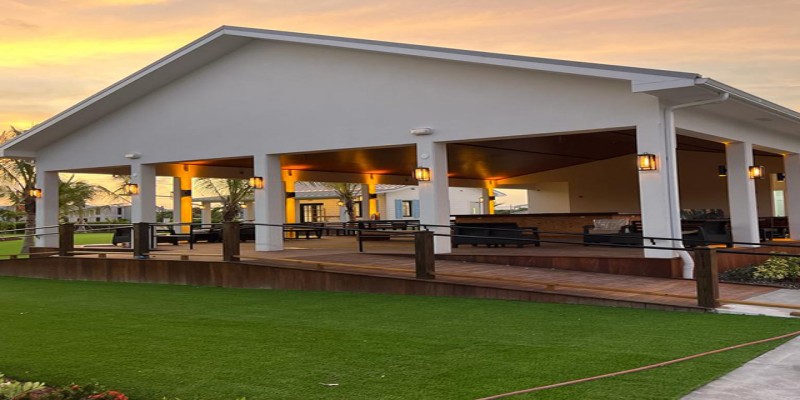
When ground space is limited, vertical design becomes essential. Instead of spreading plants across the floor, shift greenery upward using walls, fences, or freestanding structures. This approach not only saves space but also draws the eye upward, making the backyard feel taller and more dynamic.
Vertical planting can take many forms depending on the layout. Trellises support climbing plants, while wall-mounted planters and hanging baskets allow you to layer greenery without crowding the ground. In narrow backyards or side yards, vertical herb gardens are especially practical, turning unused wall space into functional planting zones. This method also improves airflow and accessibility, making maintenance easier compared to dense ground planting.
Furniture choices have a major impact on how spacious a backyard feels. In small spaces, oversized or single-purpose pieces quickly become obstacles. Instead, prioritize items that combine functionality with a compact footprint.
Foldable chairs and tables can be stored away when not in use, freeing up space for other activities. Built-in seating along edges or walls reduces the need for extra furniture while keeping the center area open. Pieces with hidden storage—such as benches that hold cushions or tools—help reduce clutter without requiring additional storage units.
● Choose furniture that can be easily moved or reconfigured
● Favor slim profiles over bulky designs
● Position seating along boundaries to maintain open central space
Traditional in-ground garden beds often require dedicated space that small backyards cannot afford. Containers offer a more flexible alternative, allowing plants to be arranged, moved, or replaced as needed. This adaptability is especially useful for irregular layouts, patios, or areas with poor soil conditions.
Containers also make it easier to control plant growth and spacing, preventing overcrowding. They can be grouped to create focal points or spread out to maintain balance. In addition, raised containers improve drainage and reduce maintenance compared to traditional beds.
Feature | Container Gardening | Traditional Garden Beds |
Flexibility | Easy to move and rearrange | Fixed layout |
Space efficiency | Suitable for small or irregular areas | Requires dedicated ground space |
Maintenance | Easier to manage and control growth | More labor-intensive |
Accessibility | Can be placed at convenient heights | Ground-level only |
By combining vertical planting, adaptable furniture, and container gardening, small backyard landscaping becomes more efficient without sacrificing usability or visual appeal.
A small backyard doesn’t need more square footage to feel spacious—it needs smarter visual design. By guiding how the eye moves through the space and reducing visual clutter, even a compact layout can appear deeper, wider, and more open. The key lies in subtle design decisions that influence perception rather than physical size.
The way lines are used in a backyard directly affects how large it feels. Straight lines tend to elongate a space, especially when they lead toward a focal point such as a seating area, planter, or decorative feature. This creates a sense of direction and draws attention outward, making the yard appear longer than it actually is.
Curved lines, on the other hand, introduce movement and a sense of discovery. A gently winding path can partially conceal what lies ahead, encouraging the eye to travel further and creating the illusion of depth. Even in a very small backyard, a simple stepping-stone path or a change in paving direction can subtly reshape how the space is perceived.
Line Type | Visual Effect | Best Use Case |
Straight | Extends length, creates clarity | Narrow or rectangular backyards |
Curved | Adds depth and softness | Garden-style or relaxed layouts |
Diagonal | Breaks rigid structure | Small spaces needing visual expansion |
Adding more plants does not necessarily make a backyard feel fuller—in fact, overcrowding often has the opposite effect. A layered approach works better, where plants are arranged by height to create depth without blocking views.
Low ground covers or small edging plants can define pathways and open areas. Behind them, mid-height shrubs or ornamental grasses add texture, while a few taller elements—such as a compact tree or vertical planting—anchor the design. This progression from low to high naturally guides the eye upward and backward, giving the impression of a larger, more structured space.
Instead of scattering many different plant types, grouping similar plants together can also improve visual clarity. This reduces fragmentation and helps the landscape feel more intentional.
Color and material choices play a significant role in how spacious a backyard feels. A limited palette creates visual continuity, which prevents the eye from being interrupted by too many contrasting elements. This sense of cohesion can make even a small backyard appear calmer and more expansive.
● Use one or two main materials for hardscaping, such as stone and wood
● Repeat similar tones across furniture, planters, and surfaces
● Avoid excessive color variation in plants and décor
Neutral or natural tones tend to work especially well in small backyard landscaping, as they reflect light evenly and blend elements together. When everything feels connected, the boundaries of the space become less noticeable, allowing the backyard to feel more open and balanced.
In small backyard landscaping, ground surfaces play a bigger role than they might in larger spaces. The right base material can simplify maintenance, improve usability, and visually unify the entire layout. Artificial grass has become a practical option for compact yards, especially where traditional lawns are difficult to maintain or don’t perform well.
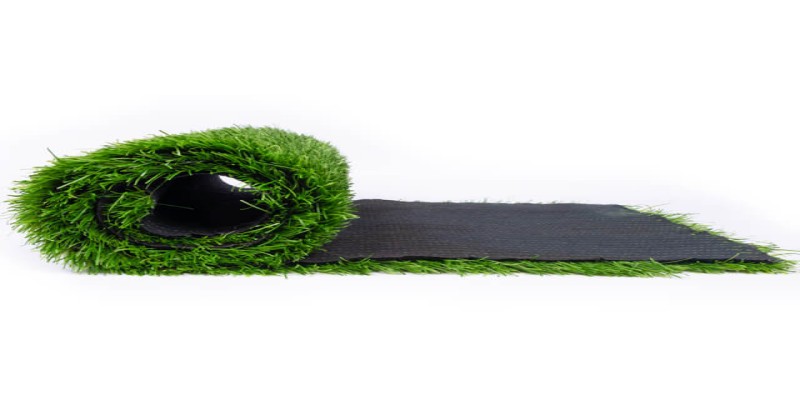
Natural grass often requires regular mowing, watering, and upkeep—tasks that can feel disproportionate in a small backyard. Artificial grass eliminates most of this maintenance while keeping the space consistently green. This is particularly useful in tight layouts where clutter or patchy turf can quickly make the yard feel neglected.
Because artificial grass maintains a uniform appearance, it helps create a clean visual foundation. In smaller areas, this consistency reduces distractions and allows other elements—like furniture or plants—to stand out more clearly. It also improves usability, as the surface remains stable and accessible throughout the year.
Artificial grass works best when integrated thoughtfully with other materials. Rather than covering the entire yard, it can be used to define specific zones or highlight functional areas. This approach keeps the design balanced and avoids a flat or overly uniform look.
Application Area | Design Approach | Visual Benefit |
Central Lawn Area | Replace natural grass with artificial turf | Clean, low-maintenance focal surface |
Pathway Edges | Combine with stepping stones or pavers | Adds structure and direction |
Seating Zones | Pair with decking or gravel | Defines functional outdoor “rooms” |
Small Play Areas | Use as a soft, even ground layer | Safe and easy-to-maintain surface |
By combining artificial grass with materials like stone, wood, or gravel, it becomes easier to organize the backyard into distinct areas without adding physical barriers. This layered approach supports both function and visual clarity.
Artificial grass is particularly suited to urban environments where sunlight, soil quality, or water access may be limited. In shaded backyards or areas with compacted soil, maintaining a natural lawn can be challenging and inconsistent. Artificial alternatives provide a reliable surface that performs well regardless of these conditions.
For households with limited time or those seeking a low-effort outdoor space, options such as Qingdao XiHY Eco-Friendly Artificial Turf provide a durable and realistic-looking surface. Designed to handle light daily use, it offers a stable, pet-friendly area that fits naturally into small backyard layouts without requiring ongoing upkeep.
Designing a small backyard is about using space wisely, not adding more. With smart layouts, simple elements, and solutions like artificial grass, even compact areas can feel open and functional. Products from Qingdao XiHY Artificial grass company offer durable, low-maintenance surfaces that help create clean, usable outdoor spaces with long-lasting visual appeal.
A: Yes, artificial grass provides a stable, low-maintenance surface ideal for compact layouts.
A: Artificial grass requires less upkeep and maintains consistent appearance in limited areas.
A: Focus on zoning, circulation, and efficient use of surfaces like artificial grass.
A: Artificial grass integrates well with pavers, decking, and gravel for defined zones.


