
WhatsApp

close
Choose Your Site
Global
Social Media
Author: Site Editor Publish Time: 2026-05-08 Origin: Site


The journey from the abrasive, carpet-like surfaces of the 1980s to today's highly engineered, biomechanically advanced pitches is a testament to sports science and manufacturing excellence. Today, top-flight leagues across Europe, the Americas, and Asia frequently host competitive, high-stakes matches on synthetic surfaces. Organizations like FIFA and UEFA have not only accepted these pitches but have actively developed stringent testing criteria to ensure they replicate the playing characteristics of the best natural grass in the world.
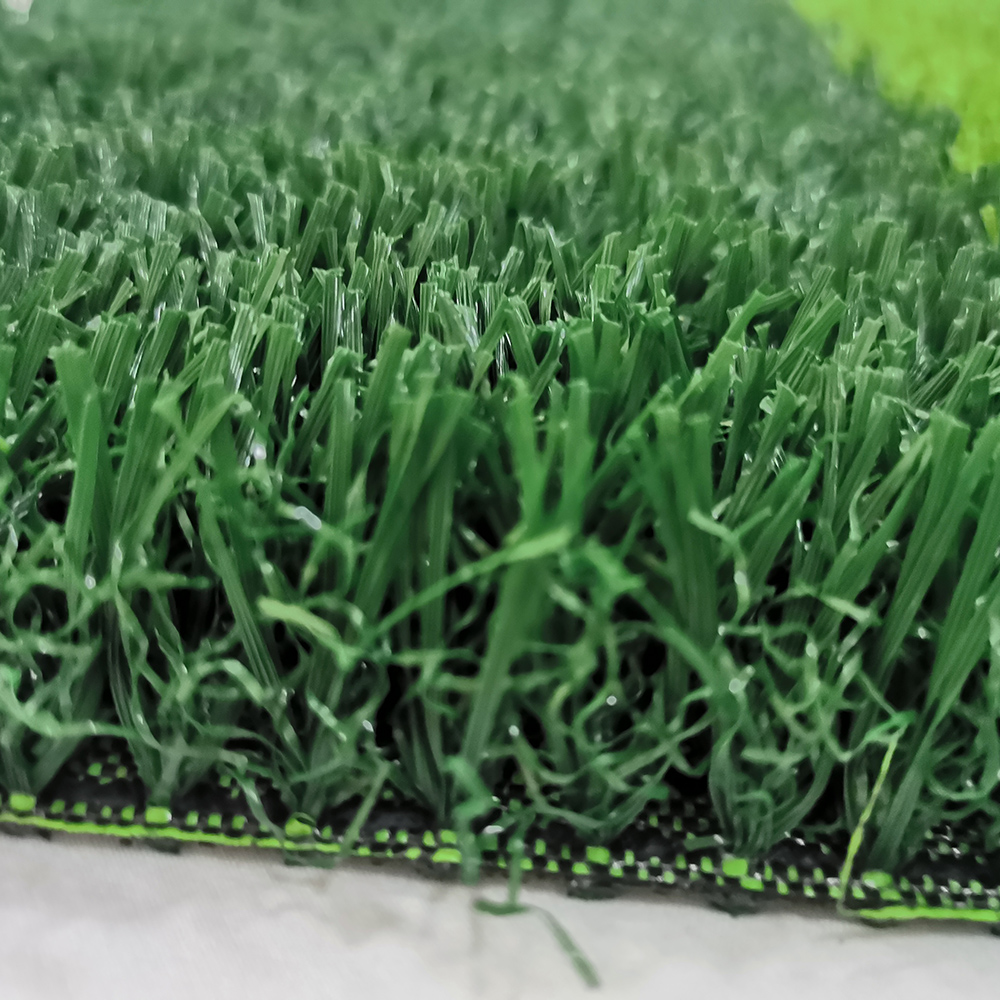
The relationship between professional soccer and synthetic surfaces has not always been harmonious. To understand why modern pitches are so widely accepted, we must look back at the turbulent history of synthetic turf in the sport. The initial introduction of artificial surfaces in professional football was met with significant resistance, primarily due to the limitations of early manufacturing technologies.
In the 1980s, several English clubs, including Queens Park Rangers, Luton Town, and Preston North End, installed first-generation synthetic pitches. These early iterations were essentially short-pile nylon carpets laid directly over hard concrete or asphalt bases. The results were notorious: the ball bounced unnaturally high, the roll was uncontrollably fast, and players suffered severe friction burns and joint injuries due to the lack of shock absorption. By the mid-1990s, these first-generation pitches were banned from professional English football.
However, the industry did not give up. The development of Third Generation (3G) surfaces revolutionized the sport. Unlike their predecessors, 3G pitches feature long synthetic fibers (usually between 40mm and 60mm) made from polyethylene, which are soft and non-abrasive. Crucially, these systems introduced infill—a layer of sand at the bottom for stability, topped with rubber granules (SBR, EPDM, or organic materials) to provide cushioning, energy restitution, and natural stud penetration. This leap in technology bridged the gap between synthetic and natural surfaces, leading to the high-performance pitches we see in professional stadiums today.
The widespread adoption of synthetic pitches in professional football would not have been possible without the intervention and standardization provided by the sport's global governing body. FIFA recognized that while natural grass is the traditional ideal, it is impossible to maintain in many parts of the world. Consequently, they established a rigorous testing framework to ensure player safety and game integrity.
In 2001, FIFA launched its Quality Programme for Football Turf. This initiative created a globally recognized standard for synthetic pitches. The programme is divided into two distinct tiers: FIFA Quality (designed for community, amateur, and training pitches, focusing on durability and high usage) and FIFA Quality Pro (the elite standard required for professional matches and international tournaments).
To achieve the FIFA Quality Pro certification, a pitch must undergo exhaustive laboratory and field testing. These tests measure two primary categories: ball-surface interaction and player-surface interaction.
Only when a pitch passes all these stringent tests is it deemed suitable for professional play, ensuring that the game remains fair, fast, and safe.
One of the most heavily debated topics surrounding synthetic pitches is player safety. For years, a persistent myth has circulated among fans and some players that synthetic surfaces inherently cause more injuries than natural grass. However, extensive biomechanical research and long-term medical studies paint a much more nuanced and reassuring picture.
Major studies conducted by UEFA, FIFA, and independent sports medicine journals have consistently shown that the overall injury rate on high-quality, FIFA-certified 3G pitches is statistically equivalent to that on natural grass. While the total number of injuries does not increase, the type of injuries can sometimes vary slightly. For instance, natural grass may see more injuries related to uneven surfaces (like divots or mud), whereas synthetic pitches require players to adapt to a more uniform, high-traction surface.
Modern engineering has specifically addressed historical safety concerns. The integration of advanced shock pads—a resilient layer installed beneath the turf carpet—has drastically improved shock absorption, reducing the cumulative stress on players' lower backs, knees, and ankles. Furthermore, the evolution of yarn shapes and infill materials ensures optimal rotational friction. This means that when a player plants their foot to make a sharp turn, the surface provides enough grip to execute the move, but releases appropriately to prevent the foot from getting "stuck," thereby protecting the delicate ligaments of the knee.
To the untrained eye, a synthetic pitch might just look like a green carpet. In reality, it is a highly complex, multi-layered engineering marvel designed to withstand extreme weather, heavy foot traffic, and the intense physical demands of professional athletes.
The construction of a professional-grade pitch involves several critical components, each playing a specific role in the overall performance of the system:
The global nature of football means the sport is played in vastly different climates, many of which are deeply hostile to natural grass. The adoption of synthetic surfaces at the professional level is often a matter of geographical necessity rather than mere preference.
In Scandinavian countries like Norway, Sweden, and Finland, as well as in Russia and Canada, the harsh, freezing winters make it physically impossible to maintain a natural grass pitch year-round. The growing season is too short, and the ground freezes solid, creating a surface that is both unplayable and dangerous. In these regions, top-tier professional clubs rely almost exclusively on synthetic pitches equipped with undersoil heating systems. This allows leagues to maintain their schedules regardless of snow or ice.
Conversely, in arid and equatorial regions, the challenge is extreme heat and water scarcity. Maintaining a lush natural grass pitch in the Middle East or parts of Africa requires millions of gallons of fresh water annually—a resource that is increasingly precious. Synthetic pitches offer a sustainable alternative, requiring zero irrigation for growth (though they may be lightly watered before professional matches to speed up the ball surface and reduce friction). This environmental adaptability makes synthetic turf a critical asset for the global expansion of the sport.
Beyond playability and climate adaptability, the financial dynamics of stadium management heavily favor synthetic surfaces. For many professional clubs, especially those outside the mega-rich elite tiers, financial sustainability is paramount. The installation of a synthetic pitch fundamentally transforms the economic model of a stadium.
While the initial capital expenditure to install a FIFA Quality Pro synthetic pitch is significant, the long-term Return on Investment (ROI) is exceptional. A natural grass pitch can typically sustain only 250 to 300 hours of play per year before the turf degrades, turns to mud, and requires expensive, time-consuming rehabilitation. This means natural stadium pitches are usually reserved strictly for first-team matches.
In stark contrast, a premium synthetic pitch can easily withstand 1,000 to 1,500 hours of play annually without any degradation in performance. This durability allows a club to use their main stadium pitch for first-team training, academy matches, women's team fixtures, and lucrative community rentals. The pitch transforms from a fragile, high-maintenance liability into a robust, revenue-generating asset. Furthermore, the day-to-day maintenance costs—eliminating the need for mowing, fertilizing, aerating, and line-painting—are drastically reduced.
The performance of a synthetic pitch is only as good as its installation. Even the highest quality turf will fail if the foundation is poorly engineered. The construction of a professional pitch is a major civil engineering project that requires meticulous precision.
The process begins with excavation and the establishment of a robust sub-base, typically composed of crushed stone and gravel. This base must be perfectly leveled using laser-guided grading equipment to ensure a flat playing surface and proper water runoff. An intricate network of perforated drainage pipes is installed within the sub-base to ensure that even during torrential downpours, water is rapidly evacuated from the pitch, preventing waterlogging.
Once the base is compacted and tested for stability, the shock pad is rolled out and secured. Following this, the massive rolls of synthetic turf are carefully positioned. The seams between the rolls are joined using specialized polyurethane adhesives and seaming tape, creating a monolithic, seamless surface. Finally, the infill materials are applied in precise layers using calibrated top-dressing machines, followed by intensive brushing to ensure the infill is evenly distributed and the fibers are standing tall. The entire process is subject to rigorous quality control checks at every stage.
For clubs, municipalities, or private investors looking to build a professional-grade facility, navigating the procurement process requires partnering with industry experts. The quality of the raw materials and the manufacturing process will dictate the lifespan and performance of the pitch.
When sourcing materials for a stadium or training facility, partnering with a reliable Synthetic Football Turf Manufacturer is the most critical step. A premier manufacturer does not just sell carpets; they provide comprehensive engineering solutions, ensuring that the yarn extrusion, backing application, and system design meet the specific climatic and usage demands of your location.
The core of your project will be the Football Artificial Grass itself. Investing in high-quality turf ensures that you meet FIFA Quality Pro standards, guaranteeing optimal ball roll, shock absorption, and player safety. It is essential to select a system with high UV stability to prevent fading and degradation over time, as well as robust tuft bind strength to prevent fiber loss during aggressive play.
Furthermore, every stadium and sports complex has unique requirements. Whether you are retrofitting a historic stadium with tight dimensions, integrating team colors into the run-off areas, or requiring specific branding woven into the turf, opting for a Custom astro turf football field provides the ultimate flexibility. Customization ensures that the pitch not only performs flawlessly but also aligns perfectly with the club's aesthetic and spatial constraints.
The debate over whether professional football can be played on synthetic surfaces has been decisively settled by science, economics, and global adoption. As climate change continues to impact weather patterns and the financial demands on football clubs increase, the reliance on high-performance synthetic pitches will only grow. The technology has evolved from a controversial alternative into a primary driver of football development worldwide, ensuring that the beautiful game can be played beautifully, safely, and consistently, anywhere in the world.
Our Product Advantages:
When you choose our advanced synthetic turf solutions, you are investing in the pinnacle of sports engineering. Our products offer distinct, market-leading advantages designed to maximize performance and ROI:
A: Yes. Leagues such as the Scottish Premiership, the Dutch Eredivisie, and various top-tier leagues in Scandinavia, Russia, and Switzerland frequently host professional matches on FIFA-certified synthetic pitches.
A: 3G turf features long synthetic grass blades supported by a mixture of sand and performance infill (like rubber or cork). "4G" is an industry marketing term usually referring to non-infill systems that rely on a very dense curled thatch layer to support the longer fibers, though FIFA currently only officially recognizes systems that fall under the 3G structural umbrella for professional play.
A: On older generations, yes. However, modern FIFA Quality Pro pitches are specifically engineered and rigorously tested to ensure the ball roll speed, bounce height, and angle of deflection are virtually indistinguishable from a high-quality natural grass pitch.
A: With proper maintenance, a high-quality professional synthetic pitch typically lasts between 8 to 12 years, depending on the volume of usage and the specific climate conditions.
A: No. Players should wear boots with molded plastic studs (AG - Artificial Grass or FG - Firm Ground boots with rounded studs). Metal studs or long blades can damage the synthetic fibers, tear the backing, and increase the risk of player injury by causing the foot to stick in the turf.


