
WhatsApp

close
Choose Your Site
Global
Social Media
Author: Site Editor Publish Time: 2026-03-05 Origin: Site


Artificial grass can look perfect on day one and fail weeks later. In most cases, the problem starts below the surface, not in the turf itself. In this article, you will learn how to prepare for artificial grass installation step by step, from checking the site to building a stable base for common landscape projects.
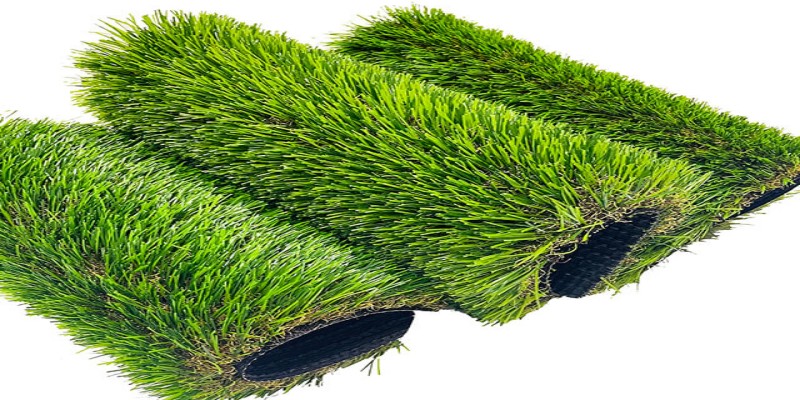
Before planning any artificial grass installation, take time to evaluate the existing surface rather than jumping straight into materials or layout. Walk across the area and observe how the ground feels underfoot. Soft or uneven spots often indicate poor soil compaction, which can lead to sinking after installation. Low areas, even subtle ones, tend to collect water and should be noted early.
In addition, look for hidden obstacles such as tree roots, leftover construction debris, or compacted old turf layers. These elements can interfere with excavation depth and base preparation later. Identifying them upfront helps avoid interruptions once the project begins and ensures smoother artificial grass installation preparation.
Accurate measurement is more important than it seems, especially when working with rolls of artificial grass that need trimming and alignment. Start by mapping the space, including edges, curves, and any fixed features like pathways or planters. Irregular shapes often require more material than expected due to cutting and fitting.
Instead of ordering exact square footage, it’s practical to allow a small margin for adjustments. This reduces the risk of visible seams or mismatched edges. Careful measurement also helps plan the direction of turf layout, which affects both appearance and installation efficiency.
Drainage is one of the most overlooked factors in outdoor artificial grass installation, yet it directly affects long-term performance. A simple way to assess this is to observe how water behaves after rainfall. If puddles remain for extended periods, the area likely needs grading or a drainage solution.
Rather than relying on complex analysis, focus on practical indicators like soil type and slope. Clay-heavy soil, for example, drains slowly, while sandy soil allows faster water movement. Planning a slight slope away from structures can significantly improve drainage and prevent water from pooling beneath the turf.
Site Condition | Potential Issue | Suggested Preparation Approach |
Uneven or soft ground | Future sinking or bumps | Level and compact before base installation |
Clay-heavy soil | Poor drainage, water pooling | Add drainage layer and adjust slope |
Existing grass or roots | Regrowth or instability | Remove completely before excavation |
Irregular layout | Material waste or visible seams | Measure carefully and allow extra margin |
Ground preparation starts with removal, not trimming. Existing grass, weeds, roots, loose organic matter, and buried debris all need to be taken out completely rather than cut back at the surface. If roots or old turf remain in place, they can decay over time, create hollow spots, or push unevenness up into the finished lawn. This is one of the most common reasons a DIY artificial grass installation looks acceptable at first but develops bumps and weed growth a few months later.
This stage also gives you a clearer view of the actual site condition. Once the top layer is gone, it becomes easier to spot hidden rocks, leftover edging, compacted patches, or soft areas that need more attention before any base material goes down. A clean starting surface makes every step after this more predictable and easier to level correctly.
Excavation is what creates room for the layers that actually support the turf. In most residential applications, removing a few inches of soil is enough, but the exact depth depends on the site, surrounding hardscape, and how much base material will be added. The goal is not simply to dig downward; it is to create enough depth so the finished artificial grass sits naturally against patios, walkways, or garden borders rather than looking raised or sunken.
A proper excavation also helps control drainage and stability. If too little soil is removed, the base may be too thin to compact well. If too much is removed without planning, the area may require unnecessary fill and extra leveling work.
Excavation Checkpoint | Why It Matters |
Remove grass and root systems fully | Prevents regrowth and uneven settling |
Excavate to a consistent depth | Helps create an even base across the area |
Leave room for compacted sub-base | Supports drainage and long-term stability |
Match finished height to nearby edges | Creates a cleaner transition to surrounding surfaces |
Most artificial grass failures begin below the turf, not on top of it. If the clearing is incomplete or the excavation is inconsistent, the surface can shift, wrinkle, or sink after installation. Even a high-quality product with strong drainage performance, including Qingdao XiHY artificial grass, still depends on a properly prepared base to perform as intended.
Pay close attention to these warning signs before moving on:
● soft pockets that feel spongy underfoot
● visible low spots after soil removal
● leftover roots or vegetation near the edges
● uneven excavation depth across the site
Ignoring those issues at this stage usually means correcting them later by lifting turf, reopening seams, and rebuilding sections of the base rather than moving smoothly into installation.
The base layer is what turns artificial grass from a surface covering into a stable, long-lasting installation. While the turf is the visible part, the material underneath controls how well the surface drains, how firm it feels underfoot, and whether it stays even over time. For most residential projects, commonly used base materials include crushed stone, road base, or decomposed granite. The exact choice depends on site conditions and intended use, but the goal stays the same: create a compacted layer that supports the turf while allowing water to pass through efficiently.
This is why synthetic turf base preparation should be approached as a structural step rather than a filler step. A loose or poorly draining base can shorten the life of the installation even if the turf itself is high quality. The base should be spread evenly across the excavated area, with enough depth to provide support without raising the finished lawn above nearby hardscape. If one section is deeper or looser than another, the final surface is much more likely to settle unevenly.
Base Material | Main Strength | Best Fit |
Crushed stone | Strong drainage and stable support | General landscape installations |
Road base | Dense compaction and durability | High-traffic areas |
Decomposed granite | Smooth finish and workable texture | Decorative or light-use spaces |
Many installation problems trace back to weak compaction rather than the wrong turf. Even a good base material can fail if it is not compacted properly. When the base remains loose, it shifts under pressure, which can lead to low spots, ripples, or seams that become more visible over time. This often happens gradually, so the lawn may look fine right after installation and then start showing problems after regular use or rainfall.
A simple way to think about compaction is this: the base should feel solid when you walk on it, not soft, sandy, or springy. If your footprint leaves an impression or the surface breaks apart easily, it is not ready. Compaction should happen in controlled passes rather than all at once, especially if the base is built in layers. Light moisture can help bind fine particles together, but overwatering can make the surface muddy and uneven.
A well-compacted base usually has these characteristics:
● it feels firm and consistent across the whole area
● there are no soft pockets near edges or corners
● loose aggregate does not shift significantly underfoot
● the surface holds its shape before the turf is installed
A good base should look smooth, but it should not be perfectly flat in the strictest sense. Artificial grass needs a subtle slope so water can move away naturally instead of collecting beneath the surface. That slight grade is especially important near patios, walls, and foundations where trapped moisture can become a problem. The goal is visual flatness combined with functional drainage.
This balance matters because artificial grass drainage performance depends on more than the backing alone. Even if the turf is designed to drain well, water still needs somewhere to go once it passes through. A base that is level to the eye but shaped with a gentle fall helps prevent puddling without making the lawn look uneven. During preparation, check from multiple angles rather than relying on a single line of sight, because minor dips are often easier to feel underfoot than to see from above.
Before laying any artificial grass, pause and inspect the base as if this were the last chance to fix it—because in many ways, it is. The surface should feel compact and stable from edge to edge, without loose aggregate, soft pockets, or areas that shift under pressure. Walking across it is one of the simplest tests: the base should feel firm and consistent, not crunchy or uneven. If one corner feels softer than the rest, that weak point will usually become more obvious after the turf is installed rather than less.
The surface also needs to be clean and installation-ready. That means no exposed roots, no leftover debris, and no sharp material that could affect the turf backing. At this stage, the base should already have its final shape, including any slight grade needed for drainage. If it still needs patching, leveling, or repeated compaction, it is too early to move on.
Some of the most important choices happen right before installation, not at the beginning. Weed barrier is one of them. In some settings, especially where weed pressure is high or the soil is unstable, a barrier can help separate the soil from the base and reduce future maintenance. In other cases, such as certain pet-use areas, it may not be the best option because it can interfere with drainage or trap unwanted residue below the surface.
Edging is another detail that should be fully settled before the turf rolls out. It does more than create a cleaner outline. Proper edging helps define the installation area, supports the perimeter, and makes it easier to secure the turf without edge movement later.
Final Decision Point | What to Confirm Before Laying Turf |
Base condition | Fully compacted, even, and free of loose spots |
Surface readiness | Clean, smooth, and shaped for drainage |
Weed barrier | Chosen based on site conditions and intended use |
Edging | Installed or ready so the perimeter can be secured properly |
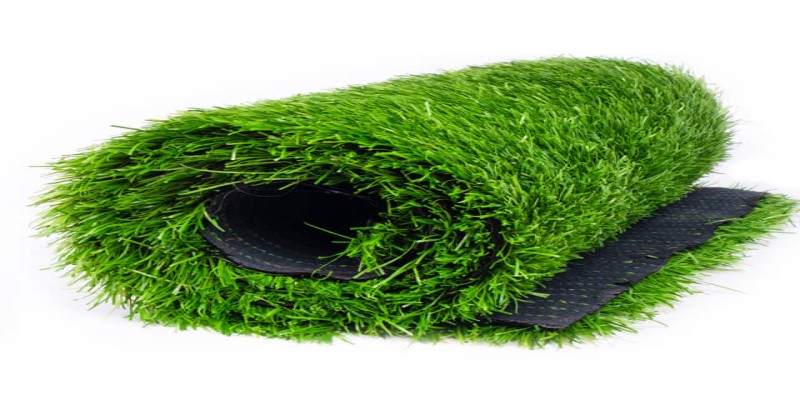
Artificial grass usually arrives tightly rolled, and that storage shape can make installation harder if the material is laid immediately. Unrolling it and allowing it to sit flat for a period of time helps relax the backing and reduce visible creases. This matters even more with denser turf products, since thicker fiber structure can hold roll memory longer and resist settling into place right away.
Giving the turf time to adjust to outdoor temperature also makes trimming and positioning easier. The material becomes more cooperative when it has had time to expand naturally, especially on warmer days. Instead of fighting curled edges or stiff sections during installation, you are working with a surface that has already started to flatten and align with the prepared base.
The success of artificial grass is decided before installation begins. Clean removal, a stable base, and proper compaction matter most for both small yards and larger landscape projects. Qingdao XiHY Artificial grass company adds value with durable, well-draining turf that supports a natural look and long-term performance across different outdoor applications.
A: Most artificial grass projects need 2–4 inches removed for base and leveling.
A: Yes. A compacted base keeps artificial grass stable and reduces sinking or wrinkles.
A: No. Artificial grass may not need one in every site, especially some pet-use areas.
A: Watch runoff after rain. Poor drainage under artificial grass often requires grading or added aggregate.


