
WhatsApp

close
Choose Your Site
Global
Social Media
Author: Site Editor Publish Time: 2026-05-12 Origin: Site


For decades, the debate between playing on natural grass versus synthetic surfaces has been a central topic in the sporting world. As technology has advanced, the modern game has seen a massive shift towards synthetic pitches. However, a common question arises among both amateur and professional players: Does playing football on AstroTurf or modern synthetic pitches require additional skills? The short answer is yes. While the fundamental rules and objectives of the game remain identical, the biomechanics, ball physics, and tactical approaches must be adapted to suit the unique characteristics of the surface.
To truly master the game on a synthetic surface, players must understand how the lack of natural imperfections, the speed of the ball roll, and the specific grip of the turf affect every single movement. From the way a midfielder weights a through-ball to the exact angle a defender chooses for a sliding tackle, the environment dictates a necessary evolution in a player's skill set. In this comprehensive guide, we will explore the intricate skill adjustments required, the physical demands of the surface, and the technological advancements that make modern synthetic pitches a marvel of sports engineering.
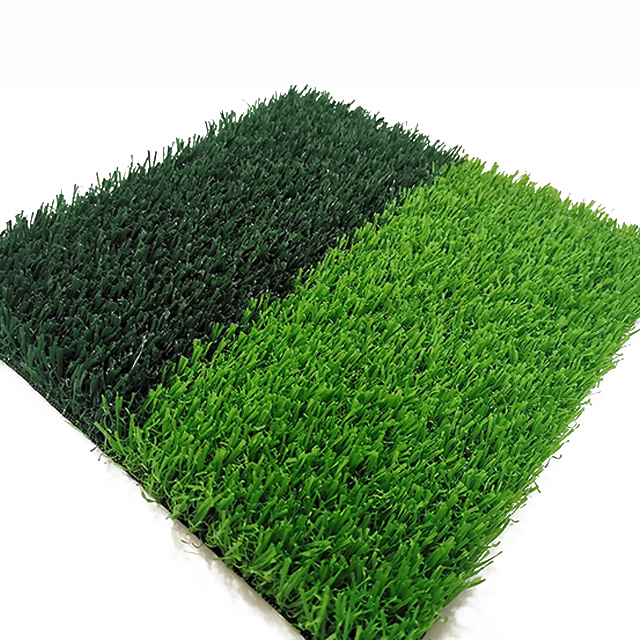
Before diving into the specific skills required, it is crucial to define what we are playing on. Football artificial grass, often referred to generally as AstroTurf (though AstroTurf is a specific brand), is a surface manufactured from synthetic fibers made to look and perform like natural grass. Modern iterations, known as 3G (third generation) and 4G pitches, incorporate sand and rubber infill to mimic the bounce, shock absorption, and ball roll of a pristine natural pitch.
The evolution from the abrasive, carpet-like surfaces of the 1980s to today's highly engineered pitches has fundamentally changed how the game is played. On a pristine natural grass pitch, friction is variable. Mud, uneven dirt, and varying grass lengths can slow the ball down unpredictably. In contrast, a synthetic pitch offers a uniform, frictionless experience. This consistency is a double-edged sword: it allows for beautiful, fast-paced, flowing football, but it ruthlessly exposes poor technique and heavy touches.
The most immediate difference a player will notice when stepping onto a synthetic pitch is the speed of the game. Because the surface is perfectly flat and the synthetic fibers offer less resistance than natural soil and organic grass blades, the ball travels significantly faster. When a pass is played along the ground, it does not decelerate at the same rate it would on natural grass. This requires players to possess a heightened sense of spatial awareness and incredibly sharp reaction times.
Furthermore, the bounce of the ball is perfectly true. On a natural pitch, a ball might hit a divot or a clump of mud and deviate from its path. On synthetic surfaces, the ball will bounce exactly as physics dictates based on its spin and trajectory. This predictability means players can trust the bounce, allowing for more audacious volleys and half-volleys, but it also means that misjudging the flight of the ball cannot be blamed on a "bad bounce."
Adapting to the speed and consistency of the surface requires players to tweak their fundamental technical skills. While you do not need to learn an entirely new sport, you must calibrate your existing abilities to match the environment.
Passing is perhaps the skill most heavily impacted by the transition to a synthetic pitch. On natural grass, players are often taught to "drive" through the ball to ensure it reaches its target, overcoming the friction of the grass. If you apply the same power on a synthetic pitch, the pass will likely be overhit, skidding away from your teammate and out of bounds.
Dribbling on a synthetic surface is a joy for highly technical players. The perfectly flat surface allows for rapid changes of direction, intricate step-overs, and close ball control without the fear of the ball bobbling up unexpectedly. However, this also means that defenders can turn and recover just as quickly.
To excel at dribbling on this surface, players need to keep the ball extremely close to their feet. The "push and run" tactic, often used by pacey wingers on natural grass, is less effective here because the ball can easily run away from the player. Instead, close-quarter agility, utilizing the sole of the boot (similar to Futsal techniques), becomes highly effective. The consistent friction allows players to roll the ball under their foot with absolute confidence, a skill that is much riskier on a muddy, uneven natural pitch.
Defenders face a unique set of challenges when playing on synthetic pitches. The speed of the attackers is amplified, and traditional defensive techniques must be modified to ensure both effectiveness and player safety.
The slide tackle is a staple of defensive football, but it is a maneuver that must be executed with extreme caution on synthetic surfaces. Despite the addition of rubber crumb infill to modern 3G and 4G pitches, the friction generated between human skin and synthetic fibers can cause severe abrasions, commonly known as "turf burn."
Therefore, defenders must adapt their skill set in the following ways:
Goalkeepers also need to adjust their technique. The true bounce means that low, driven shots will skip off the surface rapidly. Goalkeepers must get their bodies behind the ball quickly. Furthermore, diving on synthetic turf requires proper technique to avoid impact injuries and friction burns. Goalkeepers often wear padded base layers and long pants to protect their hips and knees when playing on these surfaces.
Beyond technical skills, playing on synthetic turf demands physiological adaptations. The surface is generally harder than natural grass, which changes the way impact forces travel through the body.
When running on a natural pitch, the soil compresses and absorbs a significant amount of the impact force. Synthetic pitches, while featuring shock-absorbing pads and infill, still return more energy to the player's legs. This increased impact can lead to a higher rate of fatigue in the lower back, knees, and ankles if a player is not accustomed to the surface.
Players need to develop greater lower-body strength and joint stability. Plyometric exercises, balance training, and targeted strengthening of the calves and hamstrings are essential skills for conditioning the body to handle the specific biomechanical load of synthetic turf. Additionally, recovery protocols, such as ice baths and thorough stretching, become even more critical after playing on a harder surface.
One of the most critical "skills" is knowing how to equip yourself. Wearing the wrong footwear is not only detrimental to performance but is also a leading cause of injury. The rotational traction on synthetic turf is much higher than on natural grass. If a player wears Soft Ground (SG) boots with long metal studs, the studs can get stuck in the synthetic fibers. When the player tries to turn, the boot remains planted, leading to severe knee (ACL) or ankle injuries.
Players must utilize Artificial Grass (AG) boots or Turf (TF) shoes. AG boots feature numerous short, hollow, circular studs that distribute the player's weight evenly and allow for safe rotational movement without getting locked into the turf. Understanding the interaction between your footwear and the surface is a fundamental requirement for mastering the game on synthetic pitches.
The extent to which you need to adjust your skills often depends heavily on the quality of the pitch itself. Not all synthetic pitches are created equal. The engineering behind top-tier pitches is incredibly advanced, designed to replicate the exact playing characteristics of the best natural stadiums in the world.
The foundation of a great playing experience starts at the factory. A premier manufacturer invests heavily in research and development to create yarns that are resilient, non-abrasive, and UV resistant. The manufacturing process involves extruding polyethylene or polyurethane into grass-like blades, which are then tufted into a durable backing. The quality of the backing and the precision of the tufting determine how well the turf holds up to the intense shear forces generated by players sprinting, stopping, and changing direction.
When a facility partners with an elite manufacturer, the resulting pitch requires fewer extreme skill adjustments from the players because the surface behaves so similarly to natural grass. The shock absorption is calibrated to FIFA standards, and the ball roll is optimized to ensure a natural flow to the game.
Choosing the right product involves understanding the specific needs of the players. Different types of synthetic grass are engineered for different levels of play. For instance, a professional training ground will require a high-density, long-pile grass (usually 50mm to 60mm) that utilizes a specific ratio of silica sand and performance infill (like EPDM rubber or organic alternatives like cork). This combination provides the exact biomechanical feedback required by elite athletes.
On the other hand, a community center or a 5-a-side facility might opt for a shorter pile height (30mm to 40mm) which offers a faster game and requires slightly less maintenance. The skill adjustments required on a 5-a-side pitch are heavily skewed towards rapid, close-control futsal techniques, whereas a full-sized 60mm pitch allows for a more traditional style of 11-a-side football. The specific characteristics of the grass dictate the tactical and technical approach of the teams playing on it.
The ultimate expression of modern sports engineering is the ability to customize a pitch from the ground up. Building a custom field involves more than just rolling out carpets of green plastic. It requires comprehensive civil engineering, including the installation of advanced sub-base drainage systems to ensure the pitch remains playable during torrential rain.
A custom field design also incorporates shock pads—elastic layers installed beneath the turf that significantly reduce the impact on players' joints, thereby mitigating the need for drastic physical adaptation. Furthermore, customization allows for the integration of permanent line markings for various sports, specific infill choices based on local climate conditions, and tailored fiber shapes (such as diamond or C-shaped yarns) that offer superior "memory" to keep the grass blades standing upright. When a field is custom-designed with the athlete in mind, it bridges the gap between natural and synthetic, allowing players to utilize their natural skill sets with minimal friction.
While playing on synthetic surfaces certainly requires players to refine their first touch, adjust their passing weight, and adapt their tackling and movement mechanics, the benefits provided by high-quality synthetic pitches are undeniable. The modern game demands consistency, and that is exactly what these products deliver.
Key Product Advantages Include:
A: Yes, it is highly recommended. You should wear Artificial Grass (AG) boots or Turf (TF) shoes. These feature shorter, more numerous studs that prevent your feet from getting stuck in the synthetic fibers, significantly reducing the risk of knee and ankle injuries compared to Firm Ground (FG) or Soft Ground (SG) boots.
A: Yes. Because the surface is perfectly flat and uniform, there is less friction acting against the ball. Passes will travel faster and decelerate slower, requiring players to have a softer first touch and to play passes with slightly less power.
A: While it is physically possible, it is generally discouraged unless absolutely necessary. Sliding on synthetic fibers can cause friction burns (turf burn). If you must slide, it is advised to wear protective base layers and use a modified technique to avoid direct skin contact with the turf.
A: Studies show that the overall injury rate is similar between high-quality modern synthetic turf and natural grass. However, the types of injuries can differ. Synthetic turf may see slightly more rotational injuries if improper footwear is used, while natural grass often sees more impact injuries due to uneven surfaces. Wearing the correct boots and proper conditioning mitigate these risks.


