
WhatsApp

close
Choose Your Site
Global
Social Media
Author: Site Editor Publish Time: 2026-06-10 Origin: Site


Dealing with foul smells ruins your outdoor experience completely. Artificial turf often develops severe ammonia odors during hot weather. Heat accelerates bacterial growth dramatically. This happens because uric acid gets trapped inside the synthetic fibers. Many homeowners struggle as the smell progressively worsens every single week. Simply hosing down the turf is insufficient to fix this issue. Water pushes urine much deeper into the base layers. It fails completely to neutralize the odor-causing bacteria. You end up with a highly saturated sub-base. It smells even worse when the afternoon sun heats it. Successfully eliminating pet urine artificial grass odors requires a totally different approach. You must move far beyond simple masking agents. Chemical breakdown through enzymatic digestion is strictly necessary. You also need to evaluate your underlying drainage and infill conditions. In this comprehensive guide, you will learn the exact steps required. We show you how to restore your yard permanently. You will finally keep it smelling fresh all year.
Uric Acid is the Target: Pet urine contains uric acid crystals that only enzymatic cleaners can permanently break down.
DIY vs. Commercial limits: Household solutions (vinegar) mask odors temporarily; commercial enzymes neutralize the source.
Infill is the Variable: Poorly draining or non-porous infill (like standard silica sand) is the primary reason odors scale out of control.
Routine Dictates Longevity: Establishing consistent artificial turf maintenance support prevents deep-layer bacterial saturation.
You might wonder why odors stick around stubbornly. It comes down to basic chemistry and fluid dynamics. Pet urine contains a mix of urea, urobilin, and uric acid. Urea breaks down very quickly into ammonia. Ammonia causes the sharp, pungent smell you notice immediately. Uric acid, however, crystallizes and binds tightly to surrounding surfaces. Regular water cannot dissolve these stubborn microscopic crystals.
Next, consider the physical drainage factor. Urine travels quickly down the individual turf blades. It passes directly through the synthetic backing layer. Many backings feature tiny punch holes for liquid escape. The urine then enters the infill material. Finally, it pools heavily in the base sub-layer below.
A successful cleaning protocol must reach this deep sub-layer. You must actively digest the uric acid crystals hiding there. Simply washing the surface blades accomplishes absolutely nothing. You must target the hidden crystals buried below the surface. If you ignore the base layer, odors will always return.
You need to choose the right cleaning approach carefully. We built a practical comparison framework to assess efficacy. It strictly evaluates turf safety and scalability for multiple pets.
Solution Type | Primary Mechanism | Efficacy for Uric Acid | Turf Safety & Scalability |
|---|---|---|---|
DIY (Vinegar & Baking Soda) | Acetic acid neutralizes basic ammonia odors temporarily on contact. | Low. Fails to digest proteins or stubborn uric acid crystals entirely. | Safe initially. Overuse alters base layer pH. Poor scalability. |
Bio-Enzymatic Cleaners | Live bacteria and active enzymes consume uric acid as food. | High. Breaks down the actual source into water and oxygen completely. | Very safe. Protects UV coatings. Highly scalable for multi-dog homes. |
Many people try simple household items first. Vinegar and baking soda remain very popular choices. Acetic acid neutralizes basic ammonia odors temporarily on contact. Baking soda absorbs some surface moisture quickly. However, this method has severe long-term limitations. It does not digest organic proteins. It leaves uric acid crystals completely intact. You will find it highly ineffective for multiple dogs. It fails completely on long-standing urine saturation. These household items are generally safe for synthetic materials. However, overuse alters your base layer pH negatively. It never solves the core bacterial issue.
Professionals rely on specialized commercial products daily. Live bacteria and active enzymes power these industrial cleaners. They consume uric acid as their primary food source. They literally digest the waste material completely. They leave behind only odorless water and oxygen. You must evaluate them carefully before buying any brand. Look closely for transparent, non-toxic, pet-safe labels. Avoid products containing strong bleach or harsh surfactants. These aggressive chemicals easily degrade the UV coating on artificial blades. You must also understand the reality of using them correctly. They require adequate dwell time and constant moisture to work. They are never an instant spray-and-wipe miracle fix.
You must follow correct implementation realities strictly. Avoid common application errors to guarantee complete success. Proper execution determines whether the smell disappears forever.
Surface Preparation & Initial Flush: First, remove all solid waste manually from the yard. Flush the affected area extensively using plain, cool water. This dilutes the surface urine and cools the hot turf. Enzymes die instantly on scorching hot synthetic grass.
Targeted Application: Apply the enzymatic cleaner properly across the yard. Use a pressurized pump sprayer for even liquid distribution. Focus heavily on outer perimeter edges. Target regular elimination zones aggressively where dogs pee most.
The Dwell Time (Crucial Step): Allow the solution to sit undisturbed on the blades. Wait 10 to 15 minutes, or follow strict manufacturer specs. Expert Tip: Apply it right at dusk. This prevents the hot sun from evaporating your cleaner early. Enzymes need sufficient time to feed effectively.
Deep Saturation for Base Layers: Treat severe odors with exceptionally heavy liquid volume. Saturate the area heavily so enzymes reach the infill matrix. Ensure they penetrate the porous weed barrier below. Uric acid pools heavily in these deep, dark areas.
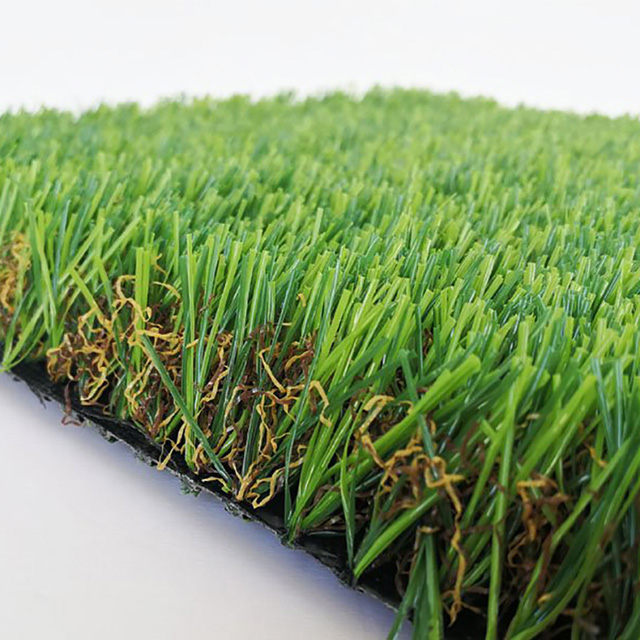
You must evaluate your landscaping infrastructure objectively. If cleaning fails repeatedly, your infill is likely the primary bottleneck. Infill holds the artificial blades upright. It also heavily dictates moisture retention.
Standard silica sand is highly problematic for pet owners. It traps moisture constantly within its dense structure. It holds onto strong ammonia gases tightly. Yards using cheap silica sand remain highly susceptible to rapid odor build-up.
Antimicrobial or zeolite infill offers a vastly better path. Zeolite is a negatively charged, highly porous natural mineral. It acts exactly like a microscopic molecular sponge. It captures ammonia gases efficiently within its honeycomb structure. It prevents them from releasing into the surrounding air.
Consider this shortlisting logic carefully before making changes. You might battle odors repeatedly despite heavy, consistent cleaning. If so, standard maintenance has clearly failed you. Upgrading the infill becomes the absolutely necessary next step. It provides highly scalable odor control for multi-pet households.
You need strict preventative measures for long-term health. Good daily habits protect your landscaping investment completely. Establishing consistent artificial turf maintenance support prevents deep-layer bacterial saturation. It stops problems before they ever start.
Implement these specific routines to maintain freshness:
Weekly Actions: Hose down high-traffic pet zones regularly with plain water. This dilutes fresh urine effectively before it dries.
Monthly Actions: Apply enzymatic cleaners preventatively across the entire yard. Do this before sharp ammonia odors become noticeable.
Annual/Bi-Annual Actions: Hire certified professionals for comprehensive deep cleaning. Use heavy power brooming to prevent turf matting. Apply fresh infill top-dressing to maintain proper drainage capacity.
Permanent odor removal requires immediate, decisive action. You absolutely need enzymatic breakdown and proper base drainage. Masking the smell with cheap sprays never works long-term. Audit your current turf odor severity today. Follow these action-oriented next steps to restore your outdoor space:
Assess the Severity: Locate the heaviest elimination zones by tracking odor concentration during peak heat.
Start Enzymatic Treatment: Purchase a high-quality, professional enzymatic cleaner and apply it heavily at dusk.
Evaluate Infill Drainage: Monitor the yard after treatment. If smells return quickly, your infill lacks proper drainage capacity.
Consult the Experts: Contact an experienced artificial lawn landscaping professional immediately if drainage problems continue.
Ask them directly about upgrading your yard entirely. Consider switching to specific pet friendly artificial grass systems. Pair them exclusively with premium antimicrobial infill products. This comprehensive approach guarantees a fresh yard for years.
A: No. Bleach can permanently discolor the turf. It destroys the UV-protective coating. It breaks down the synthetic backing over time. Furthermore, bleach is highly toxic to dogs and cats. It creates dangerous fumes when mixed with ammonia. Always choose safe bio-enzymatic cleaners instead. They protect your pets and your investment.
A: Odor reduction often occurs naturally within 24 hours. However, severely saturated base layers require patience. You may need multiple heavy applications over a few consecutive days. The live enzymes need sufficient time to feed. They must fully digest deep-set uric acid crystals hiding under the weed barrier.
A: Heavy rain certainly helps flush surface urine away. However, it often just pushes the stubborn uric acid deeper into the base matrix. Rainwater lacks the necessary bacteria to break down these tough organic crystals. It simply relocates the problem. It never replaces the strict need for routine enzymatic cleaning.


