
WhatsApp

close
Choose Your Site
Global
Social Media
Author: Site Editor Publish Time: 2025-12-04 Origin: Site


Training your dog to use fake grass can feel tricky at first, especially if they’re used to real lawns or outdoor potty spots. But with the right steps, any dog can learn to pee or poop confidently on artificial turf—whether it’s on a balcony, patio, or indoors. In this guide, we’ll walk through dog-friendly methods, scent-based techniques, and realistic training timelines to help you teach your dog to use fake grass with less stress and more success.
Dogs don’t pick bathroom spots randomly. They use instinct, smell, and texture to decide where it “feels right.” When we place fake grass in a balcony, patio, or indoor corner, the change can confuse them. Understanding what drives their hesitation helps you train them faster.
Even confident dogs can hesitate when introduced to artificial turf. Here are the most common reasons:
Turf doesn’t feel like real blades of grass. It may be too smooth. Too warm. Too uniform. Some dogs think it’s a play mat instead of a potty spot. Others don’t trust the strange scent from new turf or cleaning products.
Dogs are trained early:
Inside = don’t pee
Outside = safe to pee
So when we suddenly ask them to potty on a balcony, laundry room, or living room corner, they get mixed signals. It’s not disobedience—it’s confusion.
A balcony can seem noisy or windy. A patio might echo or feel exposed. Some dogs fear the height, railing gaps, traffic sounds, or unfamiliar lighting. When stress rises, they delay eliminating.
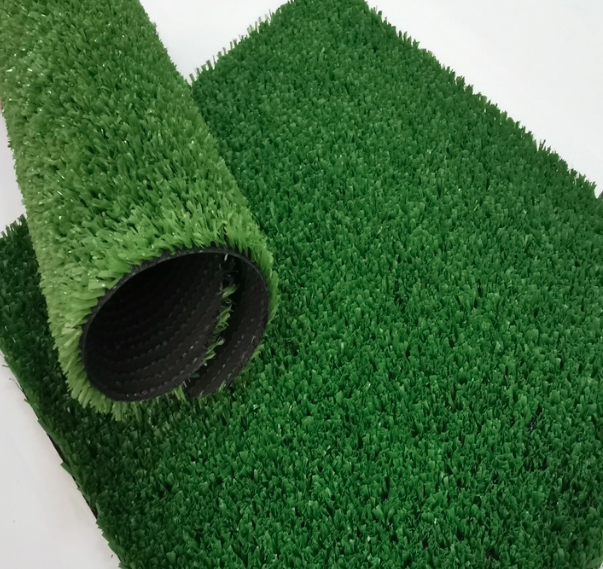
Teaching your dog to use fake grass is a lot like traditional potty training, but it adds a few extra steps because the surface, scent, and location feel unfamiliar. Dogs rely on routine, smell, and past experience, so guiding them with clear steps makes the process smoother and far less stressful. Below is a detailed, easy-to-follow training method you can use for puppies, adult dogs, and even senior dogs who’ve been using real grass for years.
Before asking your dog to do anything, let them meet the fake grass on their own terms. Dogs rarely accept a new bathroom spot immediately, especially if they are used to natural turf or outdoor smells. Your goal here is to build curiosity, not pressure.
How to do this effectively:
Place the turf in its permanent location. Dogs remember spots visually and by scent, so keeping it still helps build recognition.
Encourage gentle exploration by scattering a few treats on the grass. This gets their paws on the turf without forcing them.
Allow sniffing time. Dogs gather information through scent, and unfamiliar textures feel “wrong” until they’ve had time to examine them.
Stay calm and neutral. No commands yet. Just let them experience the space.
Many dogs need several short introduction sessions before they feel confident walking on artificial grass, especially if it’s indoors or on a balcony where the environment feels different from the outdoors.
Cue words act as a bridge between what you want and what your dog understands. When chosen and used consistently, they speed up training dramatically.
How to pick and use your cue:
Keep it short: “Go potty,” “Pee-pee,” or something natural for your household.
Say it only when you expect the action. Don’t overuse it outside of potty moments or it loses meaning.
Repeat the cue at the start of each turf visit. Dogs rely on tone, consistency, and timing.
Pair your cue with calm body language to avoid confusing or overwhelming your dog.
After a few days, your dog begins to associate your chosen cue with the act of relieving themselves, especially once rewards come into play.
Scent is the strongest tool in this entire training method.
Dogs don’t choose bathroom spots because they “look like grass”—they choose spots that smell like a place they’ve marked before or where other dogs have gone. Fake grass lacks that natural scent, which can make dogs think it’s a play mat, not a toilet.
Ways to add scent effectively:
Place a used pee pad under the turf.
Take it on a walk and catch a small amount of urine. Slide it under the turf so your dog detects the familiar scent without seeing the pad.
Dab a tiny amount of old urine onto a corner.
Just one or two drops is enough to communicate “This is a bathroom spot.”
Use a pet-safe potty attractant spray.
These sprays imitate the chemical signals dogs naturally follow outdoors. Use lightly so you don’t overwhelm them.
| Method | Why It Works | Best For |
|---|---|---|
| Used pee pad | Smells familiar, reduces confusion | Dogs new to indoors or balconies |
| Small urine dab | Helps older dogs recognize the purpose quickly | Dogs resistant to new routines |
| Attractant spray | Adds a clear scent signal | Puppies or scent-driven breeds |
A properly scented turf patch often becomes the turning point for training progress.
Dogs rely on predictable timing. A consistent schedule tells them when to expect potty breaks and helps their body adjust to using the turf instead of waiting for outdoor cues.
A proven schedule includes:
Immediately after waking up
10–20 minutes after eating
After play or excitement
After naps
Before bedtime
Whenever you notice circling, sniffing, or pacing
Use a leash during these early sessions. It prevents your dog from wandering off and keeps their attention on the fake grass long enough for them to decide whether they need to go. Let them stay on the turf for a few minutes each time—some dogs take longer to relax enough to relieve themselves.
Reward timing is crucial. Dogs connect the treat to the last thing they did within just a few seconds. If you reward too late, they might think you’re praising them for walking off the turf or sitting down.
To reinforce the behavior quickly:
Have treats in your pocket before training begins.
Deliver the reward 1–2 seconds after they finish peeing or pooping.
Pair treats with verbal praise like “Yes!” or “Good potty!”
For dogs who are food-motivated, use tiny, high-value treats.
For praise-driven dogs, use happy voices and gentle physical affection.
Immediate rewards strengthen the association and help your dog understand the turf is the correct place to go.
If your training started with pee pads, you’ll eventually want to phase them out. The transition should be gradual so the dog doesn’t lose confidence or revert to old habits.
Three-phase pad transition:
| Phase | Placement | How It Helps |
|---|---|---|
| Step A | Pee pad placed on top of the turf | Dog recognizes scent instantly and begins stepping onto the turf |
| Step B | Half pad on turf, half on floor | Encourages dog to shift weight toward turf instead of the pad |
| Step C | Pad removed completely | Dog now relies on turf texture and established routine |
Most dogs adjust in 3–14 days, though older dogs or anxious dogs may need a bit longer. What matters most is consistency—don’t move the turf, don’t change the schedule, and don’t add new training elements during the transition.
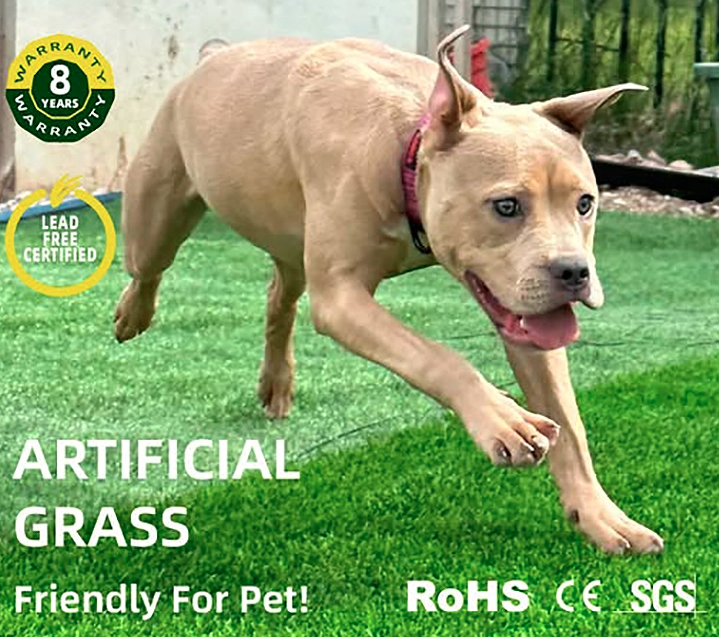
A clean turf surface keeps training on track. Dogs prefer fresh-smelling potty spots, and artificial grass needs a little care to prevent buildup from daily use. Simple routines go a long way, especially in small spaces like balconies or patios where airflow is limited.
Daily upkeep keeps smells from settling in and stops bacteria from growing. These quick tasks take only a few minutes and make the turf feel more like real, fresh grass to your dog.
Easy daily steps:
Quick rinse: Use a light spray of water to wash away fresh urine. It stops ammonia odor before it forms.
Spot cleaning: If your dog poops, pick it up immediately and rinse the area. A gentle dish-soap mix works for small stains.
Shake or brush the turf: Remove loose hair, dust, fallen kibble. It helps airflow and keeps the turf fibers upright.
A small routine like this keeps the artificial lawn from smelling stale or feeling sticky under your dog’s paws.
Deep cleaning removes trapped odors. Even high-quality turf holds some residue inside its drainage holes and base layer, so weekly cleaning stops that buildup from turning into long-term smells.
For a weekly deep clean, lift the turf if it’s the type you can move, then rinse the surface underneath so dirt doesn’t build up and create heavy odors later. After that, spray a pet-safe enzyme cleaner over the turf; it works on urine crystals your dog can’t smell but you definitely can. Use a soft brush and scrub the fibers gently, letting the solution sit for a few minutes so it can do its job. When you’re done, give the whole area a slow, thorough rinse until the cleaner runs out through the drainage holes, because any leftover soap tends to trap dirt and even change how the turf smells.
Most dogs adjust in a few days to two weeks. Puppies usually learn faster because they don’t have strong habits yet. Older dogs may need more time due to routine changes, scent differences, and hesitation about new textures. Consistent cues, rewards, and a steady schedule help speed things up.
Yes, if it’s not cleaned regularly. Urine can collect under the turf, especially on balconies or patios with limited airflow. Daily rinsing and weekly enzyme cleaning prevent odor buildup. Proper drainage layers are essential to avoid long-term smells.
High-quality turf is designed for daily dog use. It’s non-toxic and allows urine to pass through the drainage holes. Just make sure you clean it regularly so bacteria doesn’t grow. Remove solid waste immediately to keep the surface hygienic.
Pet-safe enzyme cleaners are the best option because they break down urine crystals instead of masking the smell. Mild dish soap also works for light spot cleaning. Avoid bleach or harsh chemicals—they can damage turf fibers and leave strong odors dogs dislike.
Yes, especially indoors or on balconies. A proper drainage layer stops urine from pooling underneath the turf. When water can move through easily, the area dries faster and avoids long-term odor problems. Without it, smells build up quickly.
Training your dog to feel confident on artificial turf takes patience, clear cues, and a consistent routine—but once your dog understands the space, everything becomes much easier. With the right scent signals and steady reinforcement, even hesitant dogs learn to treat the turf as their own comfortable bathroom spot.
If you want a turf surface that feels natural under paws and makes the whole process smoother, Qingdao XiHY Artificial Grass Company offers pet-friendly options designed for fast drainage and easy cleaning. The better the turf, the faster your dog adapts.


