
WhatsApp

close
Choose Your Site
Global
Social Media
Author: Site Editor Publish Time: 2026-06-08 Origin: Site


Natural grass looks beautiful in its pristine state. However, it degrades rapidly under continuous compression. Repeated walking leads to severe soil compaction. This constant pressure creates unsightly bald spots. Eventually, heavily used areas turn into a muddy mess. Property owners constantly fight a losing battle against organic wear and tear.
Synthetic turf solves this organic breakdown problem. Yet, not all artificial grass is equal. Standard residential turf will quickly mat, flatten, or tear when subjected to heavy daily use. Many buyers assume any synthetic product can withstand a busy environment. This assumption leads to premature lawn failure.
You need a surface built for true endurance. We will explore how heavy traffic artificial grass withstands high-volume foot traffic indefinitely. You will learn how specific engineering dictates long-term durability. We will examine why commercial-grade base preparation and proper infill are absolute requirements for success.
Material matters: True heavy traffic artificial grass requires polyurethane backing, structured blade shapes (like W or corrugated), and a high face weight (60oz+).
The base is the foundation: 80% of a turf’s durability comes from the engineered sub-base, not the synthetic blades.
Infill is non-negotiable: High-traffic areas require specific performance infills to maintain blade verticality and prevent matting.
Use-case matching: Specifications must shift depending on whether the traffic comes from commercial footfall, athletic cleats, or heavy pets.
Understanding turf failure helps you choose better materials. Natural grass relies on a delicate biological balance. Synthetic turf relies on mechanical engineering. Both systems fail when stress exceeds their designed limits.
Continuous pressure literally crushes natural grass blades. This action destroys the cellular structure within the plant. Meanwhile, the soil compacts underneath the surface. Compaction pushes soil particles tightly together. This physical barrier blocks oxygen and water from reaching the roots. Eventually, the grass roots suffocate and die.
Agronomists refer to a specific friction threshold. Once foot traffic crosses this threshold, organic recovery becomes impossible. The grass cannot grow fast enough to replace damaged cells. Bald spots form rapidly. Rain turns these bare patches into mud pits. You cannot out-fertilize or out-water severe mechanical damage.
Standard synthetic grass eliminates the biological failure problem. However, it introduces mechanical vulnerabilities. Many buyers mistakenly choose aesthetic-focused products for busy areas. This is a crucial error.
Under heavy use, standard flat blades flatten out entirely. They lack the structural memory to stand back up. Latex backings often separate from the primary layers under repeated stress. Furthermore, seams can easily rupture. Twisting foot traffic pulls standard seams apart. Without proper engineering, standard turf looks old and worn within months.
You must shift your focus entirely. Move away from standard artificial lawn landscaping designed primarily for curb appeal. Transition toward performance-driven engineering. This approach prioritizes structural resilience over initial softness. A high-traffic system treats the turf, infill, and base as one unified structure. They work together to disperse kinetic energy from footfalls.
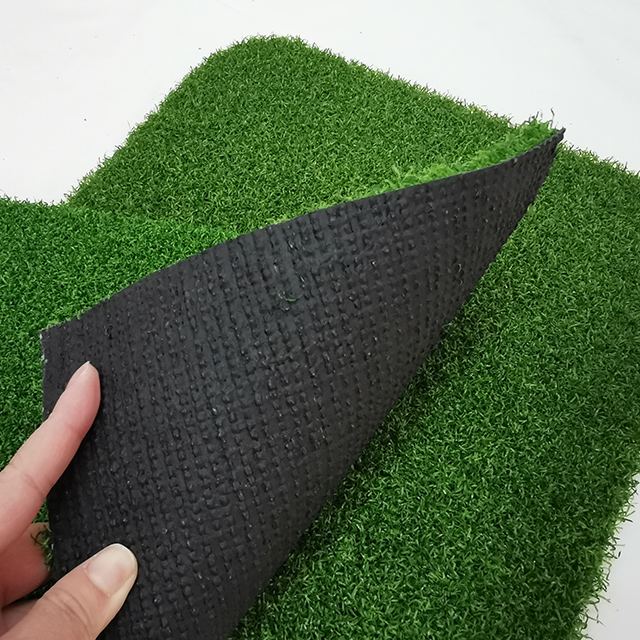
Evaluating synthetic grass requires specific knowledge. You cannot judge durability by touching the surface. You must analyze the manufacturing specifications. Each feature directly impacts the final performance.
Face weight measures the amount of synthetic yarn per square yard. Higher face weight generally indicates better durability. You need a minimum face weight of 60 to 80 ounces for busy areas. Density provides the necessary cushion against repeated impact.
Pile height is equally important. Many buyers want plush, tall blades. Avoid this temptation for busy zones. Tall blades bend easily under pressure. Shorter pile heights resist matting much better. Aim for heights between 1.0 and 1.5 inches. Short, dense pile springs back faster than long, sparse pile.
Manufacturers extrude synthetic yarn into various shapes. Flat blades fail under pressure because they lack a central spine. They simply fold over and stay flat.
You must specify structured blade profiles. Look for "W," "U," or corrugated shapes. These engineered shapes offer structural memory. They function like rigid beams. They spring back after repeated compression. Structured blades feel slightly stiffer initially. This stiffness is exactly what prevents matting.
The backing holds the entire turf system together. Most residential turf uses latex backing. Latex degrades heavily under moisture and stress. It crumbles over time.
High-traffic areas strictly require dual-layered polyurethane backing. Polyurethane resists moisture completely. It provides superior tuft bind. Tuft bind is the force required to pull a blade out of the backing. Polyurethane locks the fibers in place. This prevents blades from shedding under heavy use.
Infill is a highly critical component. It is completely non-negotiable for busy zones. Sand or silica infill acts as a physical support system. It sits between the synthetic blades.
Infill provides ballast, keeping the turf flat. More importantly, it holds the blades upright. It absorbs the shock of foot traffic. Without it, even premium grass will crush. The blades will mat down under constant commercial traffic. Proper infill ensures the yarn only bends near the tip, protecting the base.
Specification Feature | Standard Residential Turf | Heavy Traffic Engineered Turf |
|---|---|---|
Face Weight | 40 - 50 oz | 60 - 80+ oz |
Pile Height | 1.75 - 2.0 inches | 1.0 - 1.5 inches |
Blade Shape | Flat or Oval | W, U, or Corrugated |
Backing Material | Single-layer Latex | Dual-layer Polyurethane |
Tuft Bind Strength | Low to Moderate | Ultra-High |
Different environments generate different types of stress. You must match the technical solution to your specific scenario. A one-size-fits-all approach always fails in commercial or extreme settings.
Event spaces and outdoor dining areas see constant pedestrian flow. Commercial artificial turf faces unique challenges. It needs maximum UV resistance to prevent fading. It also requires ADA-compliant transitions. Edges must lay perfectly flat to prevent tripping hazards.
Furthermore, you need ultra-high tuft bind. High heels and twisting shoes pull constantly at the fibers. Commercial settings often involve dragging chairs and tables. The polyurethane backing must secure every fiber perfectly. Dense, short pile ensures furniture sits level without wobbling.
Athletic fields take extreme abuse from cleats. Players stop, sprint, and slide constantly. Sports turf for high traffic requires highly specialized engineering. You must install shock pads underneath the turf system. These pads prevent joint injuries.
Sports turf must also meet specific sliding friction coefficients. Players need to slide without severe turf burn. Heavy rubber or sand infill is mandatory. The infill protects the backing from sharp cleats. It also provides the necessary traction for rapid directional changes.
Many homeowners need durable yards for active families. A high-traffic pet zone balances aesthetic realism with extreme durability. Dogs run the same fence lines repeatedly. This behavior destroys standard lawns.
Pet zones require extreme drainage capabilities. The backing must allow rapid fluid transfer. Antimicrobial infills help manage odor alongside heavy footfall. You must use a short, dense pile. Long blades snag on dog claws, causing the turf to rip. A dense matrix prevents digging damage while remaining comfortable.
Buying premium grass solves only half the problem. Poor installation will ruin the best materials. Implementation realities define the true lifespan of your project.
Industry professionals follow the 80/20 rule. The visible grass is only the surface. Eighty percent of the engineering happens below ground. The sub-base acts as the foundation. If the foundation fails, the surface fails entirely.
A poorly built base shifts over time. It creates dangerous sinkholes and uneven surfaces. Premium turf cannot hide a failing sub-base. It will mirror every imperfection below it.
Proper base preparation requires precision. Installers cannot simply throw sand over dirt. They must execute a systematic excavation and compaction process.
Excavation: Remove at least 3 to 4 inches of native soil. This eliminates organic matter that decomposes and shrinks.
Weed Barrier Application: Install a commercial-grade geotextile fabric. This prevents native weeds from piercing the backing.
Base Rock Installation: Import Class II permeable rock. This crushed aggregate features varying stone sizes. The varying sizes interlock perfectly when compacted.
Compaction: Use a heavy vibratory plate compactor. Installers must achieve a 90% or higher compaction rate. Proper compaction prevents future rutting and settling.
Clients often ask about driving on turf. Will a car tear the synthetic grass? The truth might surprise you. Premium turf blades will survive slow vehicle movement. The yarn is incredibly tough.
However, the danger lies beneath the surface. Heavy tire pressure creates a massive point load. This weight will cause deep base ruts. If you plan to drive on the turf, the sub-base must be engineered like a driveway. You need a deeper excavation. You must use larger aggregate rock. Standard landscape bases will collapse under vehicular weight.
Standard landscape staples fail in busy zones. Ground movement and heavy walking pull them out easily. Exposed staples become dangerous tripping hazards.
You must use commercial-grade seaming tape. Installers apply heavy-duty polyurethane glue to this tape. This chemically bonds the two turf panels together. For perimeter anchoring, professional installers use pressure-treated nailer boards. They sink these boards into the concrete edge. They pneumatic-staple the turf directly to the wood. This guarantees the edges never lift under stress.
Artificial grass is low maintenance, but it is not zero maintenance. High-stress areas demand proactive care. Ignoring upkeep leads to premature material failure.
You must perform routine physical maintenance. Dust, debris, and crushed leaves accumulate on the surface. You should blow this debris off weekly. More importantly, you must address blade compaction.
You need to power-broom the surface every three to six months. A power broom features a motorized cylindrical brush. It aggressively lifts flattened fibers. We call this process cross-brushing. It revives the structural memory of the blades. It also redistributes the infill evenly across the surface.
Heavy impact zones lose infill over time. Traffic physically kicks the sand out of the turf matrix. You must monitor gate entrances, goal mouths, and primary walkways. These are extreme wear zones.
Plan for regular infill top-ups in these areas. You simply pour specialized sand over the weak spots and brush it in. Maintaining optimal infill levels is critical. It protects the exposed polyurethane backing from direct UV degradation and shoe friction. Neglecting infill levels guarantees premature bald spots.
Transparent timelines help manage expectations. Synthetic materials break down eventually under constant sunlight and friction. However, proper engineering significantly delays this process.
Commercial installations in heavy-traffic environments generally last 10 to 15 years. They endure millions of footsteps during this period. In contrast, standard residential yards often exceed 20 years. Consistent maintenance ensures you reach these maximum timelines. Skipping the power-brooming or infill replacement will cut these lifespans in half.
Heavy traffic artificial grass provides a highly effective, long-term solution. It completely eliminates the mud, dust, and bald spots associated with natural lawns. However, success requires a strict engineering mindset. Buyers must prioritize material specifications over initial aesthetic softness. You need high face weights, polyurethane backings, and structured blades.
Take proactive steps to ensure a flawless installation. When evaluating your next project, follow these guidelines:
Demand to see the technical specification sheet for tuft bind and face weight.
Ask your installer to detail their sub-base material plans in writing.
Verify they use Class II aggregate and a vibratory plate compactor.
Request commercial portfolio examples of their seaming techniques.
By enforcing these standards, your synthetic lawn will easily withstand years of continuous, heavy use.
A: Yes, it will flatten if it lacks proper infill or uses flat-shaped blades. Standard turf cannot resist continuous pressure. However, structured blades (like W or corrugated shapes) combined with adequate sand infill actively resist flattening and maintain their vertical position.
A: The synthetic turf itself won't easily tear under slow-moving tires. However, the vehicle's weight will cause deep, permanent ruts in the base. You can only drive on turf if the sub-base is deeply excavated and compacted to driveway standards.
A: It holds up extremely well. You must ensure the polyurethane backing is fully permeable for rapid urine drainage. Additionally, use a short, dense pile height. This specific combination prevents dog claws from snagging the yarn and ripping the grass.
A: Freezing temperatures cause synthetic blades to stiffen, making them temporarily more prone to crushing under heavy footsteps. Conversely, extreme heat softens the polymers. Maintaining proper infill levels acts as an insulator and physical buffer, heavily mitigating both of these extreme weather issues.


