
WhatsApp

close
Choose Your Site
Global
Social Media
Author: Site Editor Publish Time: 2026-05-25 Origin: Site


When sports clubs, schools, and municipalities consider upgrading their athletic facilities, the conversation inevitably turns to the financial and practical implications of modern synthetic surfaces. The evolution of sports engineering has transformed what was once a rigid, abrasive surface into a highly sophisticated, player-friendly system that mimics the biomechanical properties of pristine natural turf. Understanding the intricacies of these systems is crucial for facility managers and investors who want to maximize their budget while delivering a world-class playing experience.
To accurately assess the financial commitment required for a new pitch, one must look beyond the surface level. The total expenditure for a full-sized pitch is a culmination of several distinct phases, each requiring specialized materials and expertise. Generally, the costs can be divided into three primary categories: the synthetic turf system itself, the civil engineering required for the base, and the professional installation labor.
A standard full-size FIFA-compliant pitch covers approximately 7,000 to 8,000 square meters. When calculating the total investment, stakeholders must account for the excavation of the existing surface, the installation of a robust drainage system, the laying of a dynamic or engineered sub-base, the addition of a shock pad (if required), the turf rolls, seaming materials, and the infill system. Each of these components plays a vital role in the longevity and performance of the football artificial grass.
The materials constitute a significant portion of the overall budget. The synthetic turf itself is engineered using advanced polymers, primarily polyethylene (PE) for its softness and durability, sometimes blended with polypropylene (PP) for added resilience. The manufacturing process involves extruding these polymers into yarn, which is then tufted into a primary backing and sealed with a secondary coating, usually polyurethane (PU) or latex. PU backing, while slightly more expensive, offers superior moisture resistance and tuft bind strength, making it highly recommended for regions with heavy rainfall.
Beyond the turf, the infill system is a critical material cost. Traditional systems use a combination of silica sand for stabilization and Styrene-Butadiene Rubber (SBR) granules for shock absorption. However, environmental and health considerations have led to the rise of alternative infills, such as Ethylene Propylene Diene Monomer (EPDM), Thermoplastic Elastomer (TPE), and organic options like cork or coconut husk. These premium infills increase the initial material cost but offer better temperature regulation, reduced odor, and enhanced safety profiles for the football artificial grass.
The installation of a synthetic pitch is not a DIY project; it requires heavy machinery, laser-guided leveling equipment, and highly skilled technicians. The labor costs encompass site surveying, earthworks, and the meticulous process of laying and seaming the turf. Proper seaming is critical; if the joints between the turf rolls are not perfectly aligned and glued using high-grade polyurethane adhesives and seaming tape, the pitch will suffer from premature failure and pose tripping hazards to players.
Furthermore, the distribution of the infill must be executed with precision. Specialized top-dressing machines are used to brush the sand and rubber granules into the turf fibers evenly. If the infill is uneven, it affects ball roll, ball bounce, and player traction. Engaging an experienced installation team ensures that the football artificial grass meets strict biomechanical standards set by governing bodies like FIFA, thereby protecting your investment.
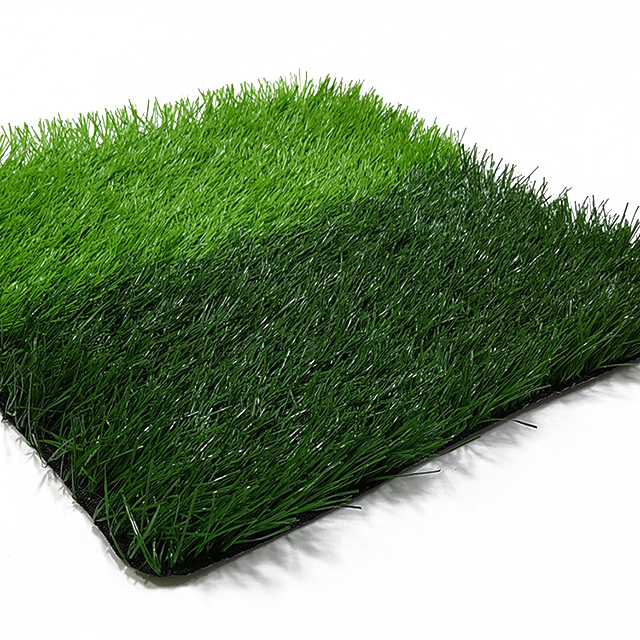
Not all synthetic turfs are created equal. The price per square meter can vary wildly based on the specific technical specifications of the product. Understanding these specifications allows buyers to make informed decisions that balance cost with performance requirements.
1. Pile Height and Yarn Weight: The pile height (the length of the turf fibers) for football typically ranges from 40mm to 60mm. A 60mm pile height requires more raw material and a thicker infill layer, thus increasing the cost. Additionally, the face weight (the amount of yarn per square meter) dictates the density and lushness of the pitch. Higher face weights provide better wear resistance and a more natural feel but come at a premium.
2. Dtex (Decitex): Dtex is a unit of measurement that indicates the mass in grams per 10,000 meters of a single yarn. A higher Dtex means a thicker, more robust fiber that can withstand heavy, continuous use without splitting or flattening. Professional-grade pitches usually utilize high-Dtex monofilament yarns with specialized cross-sections (such as diamond, C-shape, or S-shape) to enhance resilience and reduce glare.
3. Manufacturer Sourcing: Where and how you procure your turf significantly impacts the final bill. Working directly with a reputable Synthetic Football Turf Manufacturer eliminates middleman markups, ensuring you receive factory-direct pricing, comprehensive warranties, and customized solutions tailored to your specific climatic and usage needs. Direct manufacturers also maintain stricter quality control protocols throughout the extrusion and tufting processes.
A common hurdle in the decision-making process is the comparison between natural grass and synthetic alternatives. While the initial capital expenditure for a natural grass pitch is generally lower, the long-term financial reality paints a very different picture. Natural grass is a living organism that requires constant, expensive upkeep to remain playable, especially in adverse weather conditions.
Natural pitches demand daily watering, weekly mowing, regular fertilizing, aerating, overseeding, and the application of pesticides and herbicides. Furthermore, a natural pitch can only sustain approximately 250 to 300 hours of play per year before the surface begins to degrade, turning into a muddy, unsafe hazard. In stark contrast, a synthetic pitch can easily accommodate upwards of 1,500 to 2,000 hours of play annually, regardless of rain or shine.
When calculating the Return on Investment (ROI) over a 10-year lifecycle, the synthetic option almost always wins. The massive reduction in water bills, landscaping labor, and chemical treatments offsets the initial installation cost within the first few years. Moreover, the ability to rent out the facility for extended hours, evenings, and weekends generates a substantial new revenue stream for the pitch owners.
Investing in premium Football Artificial Grass guarantees a consistent, high-performance surface that attracts local leagues, tournaments, and community events. The predictability of the surface—where ball roll and bounce remain uniform across the entire field—is highly valued by players and coaches alike, further driving up the utilization rate of the facility.
The success of a synthetic pitch relies heavily on the quality of its installation. A meticulously planned and executed installation process ensures that the pitch drains properly, remains level, and provides a safe playing environment for athletes. The process is highly technical and follows a strict sequence of events.
Phase 1: Excavation and Earthworks. The existing topsoil must be removed to a specific depth, usually between 200mm to 300mm, depending on the local soil conditions. The sub-grade is then compacted and laser-leveled to create a stable foundation with a slight gradient (typically 0.5% to 1%) to facilitate lateral water drainage.
Phase 2: Drainage System Installation. A network of perforated drainage pipes is installed in trenches across the sub-grade. These pipes collect rainwater that percolates through the turf and base, directing it away from the pitch into local watercourses or attenuation tanks. Proper drainage is non-negotiable; standing water can ruin the sub-base and cause the turf to lift.
The sub-base is the structural heart of the pitch. It typically consists of two layers of crushed aggregate. The lower layer utilizes larger stones for stability and drainage, while the upper layer uses finer stones to create a smooth, level surface. In some premium installations, a porous asphalt layer (macadam) is added on top of the aggregate to provide ultimate stability and perfectly uniform planarity. This engineered base prevents any shifting or sinking over the lifespan of the football artificial grass.
Following the base, an optional but highly recommended shock pad is rolled out. The shock pad absorbs impact, reducing the stress on players' joints and lowering the risk of concussions. Once the base and shock pad are ready, the turf rolls are carefully positioned, trimmed, and glued. Finally, the silica sand and performance infill are mechanically brushed into the fibers in multiple thin layers to ensure the yarns stand upright and provide the correct biomechanical response.
While synthetic pitches are often marketed as "zero maintenance" compared to natural grass, this is a misconception. They are "low maintenance," but regular care is absolutely essential to protect the investment, maintain playing characteristics, and honor the manufacturer's warranty. Neglected pitches suffer from compacted infill, flattened fibers, poor drainage, and an increased risk of player injury.
Routine maintenance should be performed weekly or bi-weekly, depending on usage levels. The primary task is drag brushing. Using a tractor-mounted brush, the maintenance team sweeps the pitch to redistribute the infill evenly, lift the turf fibers, and remove surface debris like leaves, twigs, and trash. Keeping the surface clean prevents organic matter from decomposing and contaminating the infill, which can lead to moss and algae growth.
Beyond weekly brushing, deep maintenance is required periodically. Over time, the infill can become compacted due to heavy foot traffic, turning the surface hard and unforgiving. Decompaction machinery with specialized tines is used to loosen the infill, restoring the pitch's shock absorption and drainage capabilities.
During autumn, extra diligence is needed to remove falling leaves before they break down. In winter, snow and ice should be handled carefully; while snow can be plowed using rubber-edged blades, chemical de-icers must be approved by the manufacturer to avoid degrading the turf fibers. Additionally, infill levels should be checked annually, particularly in high-wear areas like the penalty spots and goalmouths, and replenished as necessary to maintain the integrity of the football artificial grass.
Every sports facility has unique requirements, constraints, and aesthetic preferences. Modern manufacturing techniques allow for an unprecedented level of customization, ensuring that the final product perfectly aligns with the client's vision. From the specific shade of green to the integration of permanent line markings for multiple sports, the possibilities are extensive.
When planning a Custom astro turf football field, facility managers can dictate the exact dimensions, run-off areas, and even incorporate club logos directly into the turf using different colored yarns. This bespoke approach extends to the technical specifications as well; a pitch designed primarily for youth training might prioritize a thicker shock pad and softer yarn, while a stadium pitch for professional matches might focus on high-density, high-resilience fibers optimized for fast ball roll and elite boot traction.
The industry is constantly evolving, driven by player feedback and environmental concerns. One of the most significant recent innovations is the development of non-infill or 4G turf systems. These systems utilize an extremely dense pile and a specialized root zone of texturized thatch yarn that holds the straight fibers upright without the need for sand or rubber granules. While currently more common in smaller-sided pitches, this technology is rapidly advancing.
Another area of innovation is woven turf technology, where the yarns are interwoven with the backing rather than tufted. This creates an incredibly strong tuft bind, making it nearly impossible for fibers to be pulled out, and allows for superior water permeability. Furthermore, the push for sustainability has led to fully recyclable turf systems, where the yarn and backing are made from the same polymer family, allowing the entire pitch to be melted down and repurposed at the end of its life, significantly reducing the environmental footprint of football artificial grass.
Transitioning to a synthetic sports surface is a strategic decision that yields profound benefits for any organization. By understanding the cost structures, installation requirements, and maintenance protocols, stakeholders can ensure their facility remains a premier destination for athletes for years to come. Our advanced synthetic turf systems are engineered to overcome the limitations of natural grass, providing a reliable, high-performance solution that meets the rigorous demands of modern sports.
Summary of Product Advantages:


