
WhatsApp

close
Choose Your Site
Global
Social Media


Why do so many sports fields rely on artificial grass with crumb rubber infill? It’s one of the most widely used materials, yet not every project benefits from it. In this article, you will learn how crumb rubber works in artificial grass and how to decide if it’s the right choice for your specific application.
When people evaluate artificial grass, they often focus on the visible fibers. In reality, performance is largely determined by what sits beneath them. Crumb rubber acts as a functional layer that directly influences how the surface behaves under pressure, movement, and repeated use. Instead of simply “filling space,” it plays an active role in shaping how the turf responds during everyday use.
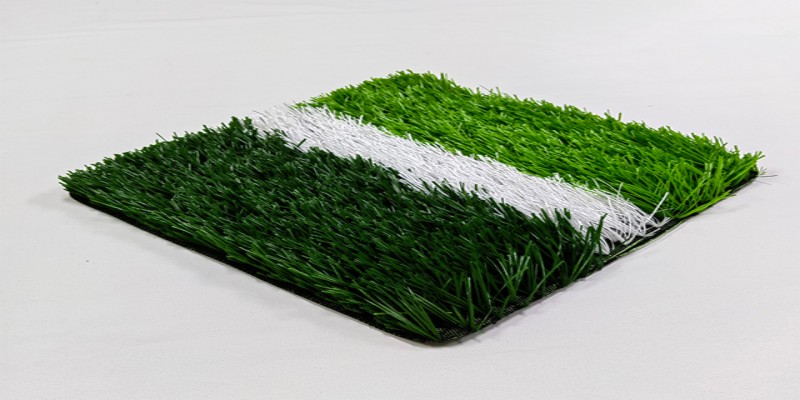
In a finished artificial grass system, crumb rubber forms the primary load-bearing layer. Rather than stepping directly on the backing material, users interact with a stabilized mix of fibers and infill. This distribution of weight helps prevent localized stress points that would otherwise damage the turf structure over time.
Another key function is fiber support. Artificial grass blades are flexible by design, and without infill, they tend to flatten quickly under traffic. Crumb rubber fills the space around each fiber, helping it remain upright and evenly spaced. This not only improves visual consistency but also reduces premature wear caused by friction and bending.
Beyond appearance, this structural support protects the backing layer—the component that anchors the fibers in place. By acting as a buffer between foot traffic and the backing, crumb rubber reduces direct abrasion and extends the functional lifespan of the turf system.
The most noticeable difference crumb rubber makes is in how the surface feels during movement. Its elastic properties introduce a level of cushioning that hard infill materials cannot provide. When a player runs, jumps, or falls, the infill compresses slightly and then rebounds, helping to absorb impact forces and reduce strain on joints.
This same responsiveness contributes to more predictable traction. A stable infill layer allows footwear to grip the surface without excessive slipping or sudden resistance. The result is a balance between grip and release, which is essential for activities that involve quick direction changes.
The interaction between cushioning and traction ultimately defines playability. Surfaces with crumb rubber tend to feel more consistent across different areas of the field, even under heavy use. This consistency is particularly important in sports environments, where uneven footing can affect both performance and safety.
Performance Aspect | With Crumb Rubber Infill | Without Proper Infill |
Surface Stability | Even weight distribution and minimal shifting | Uneven surface, prone to movement |
Cushioning | Noticeable shock absorption and rebound | Harder impact, limited energy return |
Fiber Support | Fibers remain upright and spaced | Flattening and faster wear |
Traction | Balanced grip during movement | Inconsistent footing |
In practical terms, crumb rubber transforms artificial grass from a decorative surface into a functional one capable of handling dynamic use.
Crumb rubber didn’t become widely used in artificial grass by accident. Its adoption is closely tied to how well it fits the practical demands of large-scale turf projects. From installation efficiency to long-term usability, it aligns with the realities faced by contractors, facility managers, and organizations working with limited budgets and high usage expectations.
One of the main reasons crumb rubber is so common is its ability to perform consistently across large surface areas. In projects such as football fields, soccer pitches, and multi-use athletic facilities, materials must be easy to distribute, level, and integrate into the turf system. Crumb rubber meets these requirements by flowing evenly between fibers and adapting well to mechanical installation processes.
Its compatibility with standard artificial grass systems also plays a significant role. Most modern turf designs are built with infill in mind, and crumb rubber integrates seamlessly with typical base layers and fiber structures. This reduces the need for specialized equipment or custom installation methods, which can slow down projects and increase labor costs.
In large installations, consistency is critical. A material that behaves predictably during installation helps ensure uniform surface performance across the entire field. Crumb rubber’s particle size and flexibility allow it to settle evenly, minimizing irregularities that could affect playability or maintenance later on.
Beyond installation, cost is a defining factor in material selection. Crumb rubber offers a level of performance that meets the needs of most athletic applications without significantly increasing project budgets. For schools, community fields, and training facilities, this balance makes it a practical choice.
Instead of aiming for premium material characteristics, many projects prioritize reliability and durability within a fixed budget. Crumb rubber delivers sufficient shock absorption, stability, and drainage to support frequent use, making it suitable for environments where the field is in near-constant operation.
Decision Factor | Crumb Rubber Infill | Higher-End Alternatives (e.g., TPE/EPDM) |
Material Cost | Lower, widely accessible | Higher, specialized production |
Installation Complexity | Standard methods, widely supported | May require more controlled processes |
Performance Level | Meets most general athletic needs | Designed for specific performance goals |
Project Suitability | Schools, public fields, large areas | Premium or specialized facilities |
This balance between affordability and functional performance is a key reason why crumb rubber continues to be selected in many real-world artificial grass projects, particularly where scale and budget are both defining constraints.
Choosing crumb rubber for artificial grass is less about whether it is “good” or “bad” and more about how well it matches the way the surface will actually be used. Different environments place very different demands on turf systems, and crumb rubber tends to perform best when those demands align with its strengths in durability, resilience, and consistency.
Crumb rubber is most commonly found in environments where the surface is exposed to repeated impact and continuous activity. Sports fields are the clearest example. Football, soccer, and multi-use athletic facilities rely on a surface that can absorb shock, maintain footing, and recover quickly after heavy use. In these settings, the infill is expected to perform under constant stress rather than occasional foot traffic.
High-frequency use environments also benefit from its ability to maintain structure over time. Training grounds, school athletic fields, and community sports complexes often operate on tight schedules, leaving little time for recovery between sessions. A stable infill layer helps preserve surface consistency even when the turf is used daily.
Even within similar project types, several variables can affect whether crumb rubber is the right fit. Climate is one of the most important. In regions with strong sunlight and high ambient temperatures, the surface behavior of artificial grass can change noticeably. Materials that absorb and retain heat may influence how comfortable the field feels during peak hours, which becomes a practical consideration for scheduling and usage.
User type also plays a role. Surfaces designed for trained athletes are typically evaluated based on performance characteristics such as traction, responsiveness, and impact absorption. In contrast, spaces intended for casual use—such as residential lawns or recreational areas—may prioritize comfort, cleanliness, or ease of maintenance. The expectations in these environments are different, even if the turf system appears similar at first glance.
Once installed, the differences between infill materials become more noticeable through daily interaction. Surface feel is one of the first things users recognize. Crumb rubber introduces a slightly resilient layer that responds to movement, which can make running and directional changes feel more controlled. This responsiveness tends to remain relatively consistent across the surface when the infill is properly distributed.
Interaction with footwear is another practical aspect. Small rubber particles can shift slightly during activity and may adhere to shoes or equipment. While this is generally expected in athletic settings, it becomes more noticeable in environments where users move between indoor and outdoor spaces frequently.
Maintenance also influences long-term performance. Over time, infill levels may need adjustment to maintain even coverage and consistent surface behavior. Regular brushing helps redistribute material and keep fibers upright, ensuring that the system continues to perform as intended rather than developing uneven zones or compacted areas.
Consideration | What to Evaluate in Practice |
Usage Intensity | Frequency of use and type of activity |
Climate Conditions | Exposure to sunlight and ambient temperature levels |
User Expectations | Performance vs comfort-focused priorities |
Surface Interaction | Feel underfoot and response during movement |
Maintenance Needs | Frequency of grooming and infill adjustment |
Once crumb rubber is understood in context, the next step is usually comparison. Most decisions are not made in isolation—project planners typically evaluate a small set of alternatives that differ in feel, temperature behavior, and long-term maintenance. Rather than presenting a long list of materials, it is more useful to focus on the few options that come up most often in real projects.
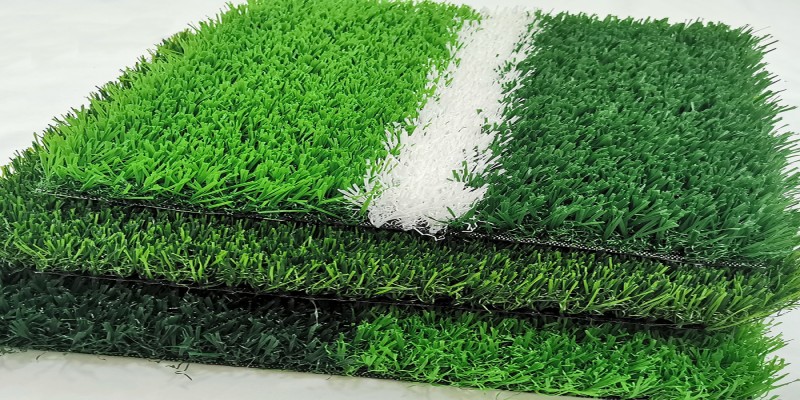
Sand remains the simplest and most widely available alternative. It is often used either on its own or as a base layer combined with other infill types. Compared to crumb rubber, sand creates a firmer surface with less give underfoot. This can be suitable for landscaping or decorative applications, but it changes how the turf performs under dynamic movement. Over time, sand can also compact, which affects drainage and surface consistency if not maintained properly.
Organic infill materials—such as cork, coconut fibers, or plant-based blends—are typically chosen for a different reason: surface behavior in outdoor conditions. These materials tend to stay cooler under sunlight and offer a softer, more natural feel compared to mineral or rubber-based infill. They are often used in projects where user comfort or environmental perception is a priority, such as residential lawns or low-impact recreational areas. However, their performance can vary depending on climate and usage intensity, especially in high-traffic zones.
More engineered infill materials like TPE (thermoplastic elastomer) and EPDM (ethylene propylene diene monomer) are designed to provide greater control over material properties. Unlike recycled rubber, these products are manufactured specifically for turf applications, which allows for more consistent particle size, color, and performance characteristics.
These options are usually considered when a project has clearly defined requirements—such as stricter environmental standards, specific surface temperatures, or a need for uniform material composition. They are also more common in facilities where long-term predictability and controlled performance outweigh initial cost considerations.
Infill Type | Surface Feel | Temperature Behavior | Typical Use Case |
Crumb Rubber | Elastic, responsive | Retains more heat | Sports fields, high-use areas |
Sand | Firm, stable | Neutral | Landscaping, base layers |
Organic Infill | Softer, natural | Cooler under sunlight | Residential, recreational spaces |
TPE / EPDM | Consistent, refined | More controlled | Premium or specialized installations |
Each option introduces a different balance between performance, comfort, and environmental behavior, which is why comparisons are usually tied closely to how the space will actually be used rather than material properties alone.
Artificial grass crumb rubber remains a practical infill for performance-focused surfaces. Its value depends on how the space is used and maintained. Choosing the right option requires balancing performance needs with real conditions. Qingdao XiHY Artificial Grass Company offers reliable turf systems with durable infill solutions designed for consistent performance and long-term use.
A: Crumb rubber in artificial grass is recycled tire granules used as infill to support fibers and improve surface performance.
A: Yes, artificial grass with crumb rubber provides cushioning and traction, making it suitable for high-impact sports applications.
A: Artificial grass infill, including crumb rubber, controls shock absorption, stability, and durability under repeated use.
A: Alternatives to artificial grass crumb rubber are considered when temperature control or specific environmental requirements are priorities.


